

Vending Operators11 min read
On this page
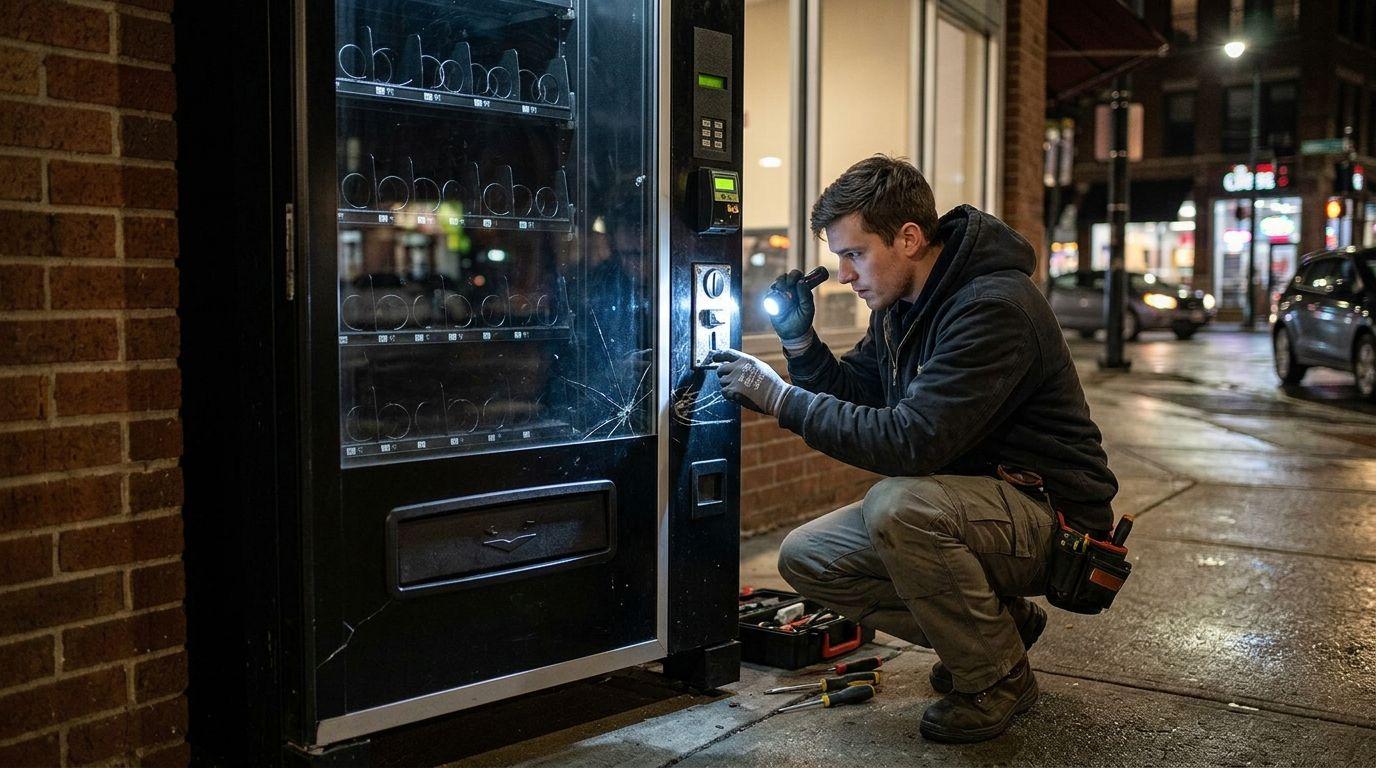
Handle vending machine vandalism by securing the area, documenting the machine before touching it, notifying the location contact, reporting suspected crime, and checking insurance requirements before repairs begin. In 2026, vending machine vandalism prevention also requires an inspection of the payment reader, wiring, locks, door, glass, and internal cash-handling parts before the machine returns to service.
TL;DR- Vending machine vandalism prevention starts with site safety, incident documentation, reporting, inspection, and controlled repairs.
- Photograph the machine, surrounding area, payment hardware, serial plate, locks, and every visible point of damage.
- Inspect card readers for loose housings, overlays, added components, damaged seals, or wiring changes before accepting payments.
- Use lighting, clear sightlines, secure mounting, reinforced hardware, service logs, and telemetry where the equipment supports it.
- Repeated damage calls for a location review, not another identical repair followed by business as usual.
Why this matters
A damaged machine can create safety, payment-security, location, and recordkeeping problems at the same time. Treating the event as a broken lock alone can leave damaged wiring, unstable glass, compromised payment hardware, or missing evidence undiscovered.
The response also affects the operator's relationship with the property manager. A prompt notice, a clear service status, and a written incident record show what happened and what is being done. The broader site should be reassessed using the same discipline applied when operators verify a proposed vending location, including access, visibility, security coverage, and after-hours conditions.
The Vending Club is a neutral vending industry platform, not the machine owner, location manager, insurer, police department, equipment maker, or repair provider. The correct 2026 response depends on the damage, equipment instructions, location agreement, insurance policy, and local reporting process.
How do you handle vandalism on a vending machine?
Follow a fixed incident sequence so that safety and evidence come before cleanup. The steps below apply whether the damage involves graffiti, forced entry, broken glass, a damaged payment device, product theft, or an attempt to move or tip the machine.
Keep customers away from the machine. Mark the machine out of service and create distance around broken glass, exposed wiring, sharp metal, leaking material, or an unstable cabinet. Do not ask location employees to investigate internal electrical damage unless they are qualified and authorized to do so.
Address any immediate threat. If vandalism is happening now, someone is injured, or the damaged machine presents an immediate danger, follow the location's emergency process. Do not confront a person, chase anyone, or disturb an area that may need to be examined.
Notify the location contact. Tell the designated manager what was found, when it was found, and whether the machine remains accessible. Ask the manager to preserve relevant camera footage, access records, witness notes, and internal incident reports under the location's own retention process.
Photograph the scene before moving anything. Capture the full machine, its position in the room, surrounding doors and fixtures, the floor, damaged panels, locks, hinges, glass, payment hardware, and serial plate. Take additional images after the machine is opened so the external and internal conditions remain distinguishable.
Record the discovery details. Write down the date, time, location, person who found the damage, person who last serviced the machine, and how the machine was secured. Preserve relevant service records, alerts, transaction exceptions, and messages from the location.
Avoid unnecessary handling. Do not clean pry marks, remove unfamiliar hardware from a card reader, discard broken parts, or straighten damaged panels before the initial record is complete. If an object must be moved for safety, photograph its original position and record who moved it.
Report suspected crime through the appropriate local process. Provide a factual description without estimating a loss before cash, products, and parts have been checked. Retain the report or incident number with the machine record if one is issued.
Review the insurance policy and claim instructions. Confirm what documentation the insurer requests, whether the machine can be repaired immediately, and whether damaged components must be retained. Do not assume vandalism, theft, business interruption, or payment-device damage is covered unless the policy says so.
Inspect the complete machine. A technician should check the cabinet, door alignment, locking points, hinges, glass, shelving, delivery door, electrical connections, refrigeration components where applicable, cash box, coin mechanism, bill validator, control board, and payment device. Visible damage does not show whether internal parts shifted or disconnected.
Disable questionable payment hardware. Do not accept card or mobile payments through a reader with a loose housing, unexplained attachment, broken seal, damaged cable, altered bezel, or unfamiliar component. Contact the payment provider or equipment support channel identified in the operator's records.
Choose repair, off-site service, or retirement. Base the choice on safe operation, parts support, frame and door condition, payment security, expected downtime, and the machine's role at the location. Record the decision in the 2026 route file rather than relying on a verbal update.
Test before reopening. Confirm that doors lock, payment methods respond correctly, product delivery works, prices and selections display correctly, safety covers are installed, and no tools or debris remain inside. Tell the location contact when the machine is available again and what preventive changes are planned.
What should you inspect after visible damage?
The inspection should follow the path a person used to reach or manipulate the machine. Start outside, continue through the access points, and finish with internal components and operating tests.
Cabinet, door, locks, and glass
Look for bent panels, widened seams, fresh scratches around locking points, loose hinges, altered fasteners, cracked glass, and a door that no longer sits square. Check the delivery opening and any separate service or coin door, not only the main lock.
A lock that turns is not enough. The locking bar and strike points must engage correctly, and the door should not open when controlled pressure is applied under the equipment maker's service procedure. Replace damaged security parts with compatible components rather than improvising a repair that interferes with service access or electrical clearances.
Cash-handling and product areas
Count cash and product after the initial photographs are complete. Record damaged spirals, shelves, delivery mechanisms, cash boxes, coin tubes, validators, or wiring separately so the incident file distinguishes stolen inventory from repair needs.
Do not use a forced validator or coin mechanism merely because it powers on. Test acceptance, rejection, change return, escrow behavior, and secure mounting under the relevant service instructions. Retain removed parts when an insurer, law-enforcement contact, or repair provider asks for them.
Cashless reader and payment area
Inspect the reader housing from multiple angles. Check whether it moves, sits differently from earlier service photos, carries an unexplained overlay, has damaged seals, or includes wires and components not listed in the equipment records.
Review payment-system notices and relevant transaction exceptions through the provider's approved portal. Do not publish customer details, card data, or security credentials in an incident log. If the reader appears altered, isolate it and follow the payment provider's security procedure before returning it to service.
Repair, remove, or retire the machine?
The correct action depends on safety, repair scope, site conditions, and whether the machine can be secured. These are operational options, not a ranking.
| Action | A fit for | Practical benefit | Limitation |
|---|---|---|---|
| Repair on site | Limited damage that can be safely diagnosed and corrected | Reduces handling and keeps the machine at its assigned location | The work area must be controlled, and parts or tools may not be available |
| Remove for service | Damage requiring bench inspection, structural work, or controlled payment-hardware review | Gives the technician a suitable repair environment | Requires transport, location coordination, and a plan for the empty space |
| Retire or replace | A cabinet that cannot be secured or equipment that cannot be returned to documented operating condition | Removes an unresolved safety or security concern | Requires equipment reassignment and updated location records |
Other repair approaches and equipment providers may exist beyond these options. Ask the equipment maker, qualified technician, insurer, payment provider, and location contact for the information each controls before deciding.
Why vandalism response varies
No single response fits every machine or location. Use these factors to set the scope of the incident:
- Type of damage: Paint or surface damage calls for different handling than broken glass, forced entry, exposed wiring, or suspected payment tampering.
- Location access: A controlled employee break room has different access records and witnesses than an outdoor site or a publicly accessible lobby.
- Machine condition: Existing door alignment, lock wear, prior repairs, and missing service records can complicate the damage assessment.
- Payment setup: Cash-only equipment, attached readers, integrated readers, and remotely managed systems require different checks and support contacts.
- Available evidence: Camera footage, access logs, telemetry events, service photos, and witness notes determine what can be verified after discovery.
- Contract and policy terms: The location agreement, service contract, lease, financing documents, and insurance policy may assign notice, repair, or documentation duties differently.
The 2026 incident record should state which factors applied. That prevents a later reviewer from treating an outdoor forced-entry attempt the same as minor indoor surface damage.
Build a vending machine vandalism prevention plan
Prevention should combine site controls, equipment controls, and a repeatable response. One hardware change cannot correct poor placement, missing records, unclear location duties, and delayed servicing at the same time.
Review placement and visibility
Walk the site from entrances, staffed areas, and security-camera positions. Identify whether walls, doors, signs, or fixtures block the machine from view. Ask who can access the area after normal operating hours and how the location records incidents.
Lighting, sightlines, and controlled access should be discussed with the property manager because the operator may not control building fixtures or cameras. Any camera use must follow the property's rules and applicable privacy requirements.
Match physical protection to the equipment
Ask the equipment maker or qualified installer about compatible locking hardware, reinforced panels, security covers, anchoring methods, and reader protection. Installation must account for servicing, ventilation, electrical access, accessibility, and the surface supporting the machine.
Do not bolt, drill, weld, or add an enclosure without approval from the parties responsible for the machine and property. An improvised barrier can create new access, maintenance, or safety problems.
Use alerts without relying on them alone
Where supported by the installed system, door events, connectivity changes, sales interruptions, and service alerts can help operators identify conditions that need review. The vending machine telemetry guide explains how remote monitoring fits into route operations.
An alert does not identify intent or prove vandalism by itself. Someone still needs to review the event, contact the location, inspect the machine, and document the outcome.
Put responsibilities in writing
The location and operator should know who reports damage, preserves footage, controls keys, approves repairs, contacts the insurer, and communicates an outage. Those duties belong in service standards or the governing agreement where appropriate.
The Vending Club's vending industry audience includes operators, suppliers, locators, and service providers, so the responsible party will not be identical in every arrangement. A route owner operating company-owned equipment has a different role from a technician servicing equipment for another business.
What belongs in the incident file?
A usable file lets another person understand the event without relying on memory. Keep records under the operator's document-retention and data-security practices.
Include:
- Discovery date, time, site, machine identifier, and current service status
- Original scene photographs and later internal inspection photographs
- Location notices, witness information, and requests to preserve footage
- Police or property incident reference, when one exists
- Insurance notices, claim instructions, and adjuster communications
- Cash, product, component, and labor records tied to the incident
- Technician diagnosis, removed-part details, repair approval, and operating tests
- Payment-provider instructions when cashless hardware was affected
- Preventive actions assigned to the operator, location, or another responsible party
Keep the incident record connected to the machine's service history. That makes repeated lock damage, payment-reader movement, outages, or problems at one site visible during a 2026 route review.
Should you move a machine after repeated vandalism?
Consider relocation when the current site cannot provide acceptable access control, visibility, physical protection, or incident cooperation. Review the location agreement, equipment ownership, transport requirements, and any property damage before moving the machine.
Relocation is not the automatic answer after one event. It becomes relevant when repairs repeat without a workable site change or when the machine cannot be operated and serviced safely in its assigned position.
Can telemetry prevent vending machine vandalism?
Telemetry cannot physically prevent someone from damaging a machine. A supported monitoring setup can provide event information, such as an unexpected door event or loss of communication, that prompts the operator to contact the location and inspect the unit.
Treat telemetry as one layer in the 2026 plan. Physical security, machine placement, location procedures, service response, and documentation still matter when an alert occurs.
What should the location owner do after an incident?
The location contact should follow the property's incident process, protect people from the damaged area, notify the operator, preserve relevant records, and avoid authorizing unplanned machine work without confirming responsibility. The location should also identify any building condition that needs attention, such as access control, lighting, or camera coverage.
The operator should not assume the property manager will file every report or arrange every repair. The agreement and incident communications should make each responsibility explicit.
Using neutral operator resources
The Vending Club is a fit for U.S. vending operators who want a neutral incident checklist and related route-management resources, not a repair vendor or insurer. Readers can also ask the The Vending Club AI assistant general vending questions, then confirm equipment, insurance, payment, legal, and site-specific decisions with the responsible source.
For a 2026 incident, keep the advice chain clear. Equipment questions go to the maker or technician, payment questions go to the processor, policy questions go to the insurer, property questions go to the location, and crime reports go through the appropriate local channel.
One last thing
Do not let cleanup erase the evidence you need. Photograph first, preserve unfamiliar parts, record who handled the machine, and separate confirmed facts from estimates. That simple discipline strengthens the 2026 response whether the next conversation is with a technician, property manager, payment provider, insurer, or local authority.
Get new vending guides in your inbox
The Vending Club publishes new operator guides most days. The free General Updates newsletter goes out every Friday with the week's new articles, and nothing else. You choose the updates you want, we confirm by email before sending anything, and you can unsubscribe at any time.
Related guides
Sources
- The Vending Club, "Vending Route Management for Growing Fleets: Complete Guide" (2026): https://www.thevendingclub.net/blog/vending-route-management-for-growing-fleets-complete-guide
- The Vending Club, "How to Set Service Standards for a Multi-Site Vending Contract" (2026): https://www.thevendingclub.net/blog/how-to-set-service-standards-for-a-multi-site-vending-contract
Common questions
- How do you handle vandalism on a vending machine?
Secure the area, document the untouched scene, notify the location, report suspected crime, review insurance instructions, and inspect the complete machine before repairs. Keep the machine out of service until its safety, security, and payment functions have been checked.
- What should you photograph after vending machine vandalism?
Photograph the full machine, surrounding area, damaged panels, locks, hinges, glass, payment hardware, serial plate, floor, and any displaced objects. Take separate internal photographs after the exterior condition has been recorded.
- Should you use a card reader after someone damages the machine?
Do not use a reader that is loose, altered, damaged, or fitted with an unfamiliar component. Isolate the payment device and follow the provider's security procedure before accepting another cashless payment.
- Does insurance cover vending machine vandalism?
Coverage depends on the exact policy, covered property, exclusions, deductible, and reporting requirements. Check the policy and contact the insurer before assuming vandalism, theft, downtime, or payment-device damage is covered.
- How do you choose vandal-resistant vending equipment?
Compare compatible locks, reinforced access points, reader protection, cabinet construction, anchoring options, service access, and manufacturer support. Confirm installation requirements with the equipment maker and the property owner.
- Can a vending machine be reopened after a damaged lock is replaced?
The machine should reopen only after the cabinet, door, locking system, internal parts, payment functions, and product delivery have been inspected and tested. A replacement lock does not resolve separate frame, wiring, glass, or reader damage.
- What records help with a vending vandalism incident?
Scene photographs, service history, machine identifiers, location messages, camera-preservation requests, telemetry events, transaction exceptions, repair records, and applicable report numbers create a usable incident file. Protect payment and customer data when storing those records.
- How do you reduce repeat vandalism at one location?
Review placement, access, lighting, sightlines, camera coverage, physical security, alert settings, service timing, and written location duties together. Repeated damage requires a site-level change or a relocation review, not only another identical repair.