

Guide35 min read
On this page
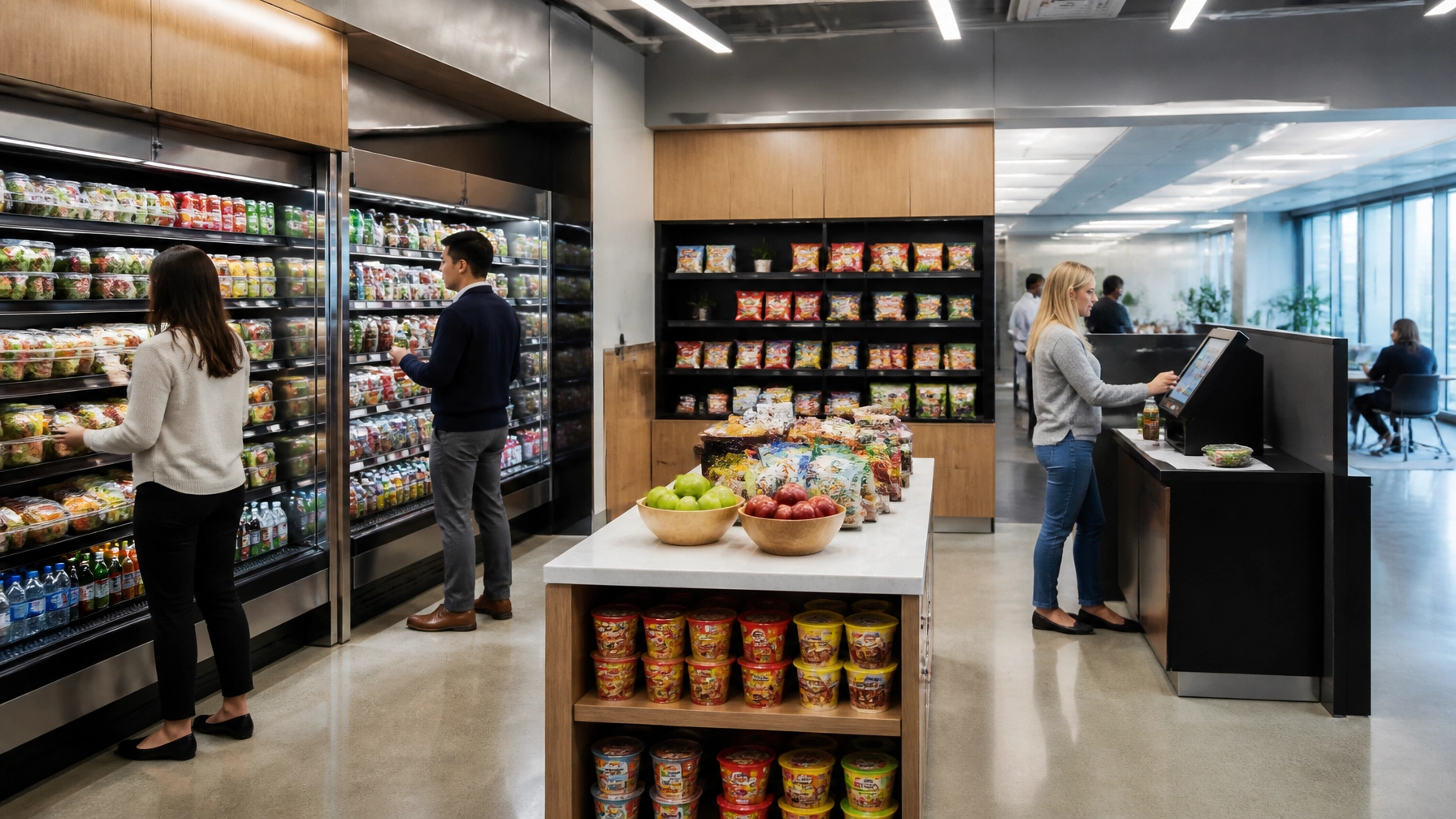
The landscape of unattended retail has undergone a seismic shift over the last decade. While traditional vending machines remain a staple of the industry, contributing to a significant portion of the $7.9B annual US operator revenue, the emergence of micro markets has redefined how we think about convenience in the workplace. As we move through 2026, the micro market model is no longer just an "alternative" to vending; it is the gold standard for high-traffic locations like offices, hospitals, and manufacturing plants.
For the modern operator, understanding the nuances of micro markets is essential for scaling an operation. These self-service retail spaces offer a larger product selection, fresher food options, and a more interactive customer experience than a standard vending bank. However, they also come with a different set of financial requirements, security challenges, and operational workflows.
This guide provides a comprehensive look at everything you need to know about starting or transitioning into micro markets in 2026, from startup costs and equipment selection to security strategies and long-term profitability.
$15K–$50KStartup cost per market80–100%Revenue lift vs. vending12–18 moTypical payback periodFor operators building around search intent like micro market business, micro market cost, micro market equipment, and micro market profitability, the big opportunity is understanding how all the moving parts fit together. A strong micro market operation is not just a nicer breakroom setup. It is a carefully planned retail system built on location quality, software visibility, disciplined replenishment, and the right mix of fresh food, snacks, beverages, and security controls.
This expanded guide is designed to help both first-time operators and established vending companies evaluate whether a micro market belongs in their growth plan. We will cover the numbers, the equipment, the software, the supplier relationships, the location checklist, the theft-prevention workflow, and the practical steps involved in turning an average vending account into a stronger unattended retail account.
Common Questions
Last updated: August 2026
Best micro-market suppliers for office locations
Evaluate micro-market suppliers on four things rather than on a ranked list: whether you are buying hardware, a software platform, or both; the full fee stack (kiosk purchase or lease, platform subscription, payment processing, and support); parts and service coverage in your metro; and whether product sourcing and planogram control stay with you. For an office account, kiosk uptime and remote support response times matter more than headline hardware price — a market that is down is a market earning nothing in front of a client who notices. Work through the criteria in How to Choose a Micro Market Supplier, then compare providers in the Equipment & Technology Suppliers directory.
Defining the Micro Market Model
At its core, a micro market is an unattended retail space that operates on a trust-based, self-checkout model. Unlike a vending machine, where products are locked behind glass and dispensed through a mechanical process, a micro market allows customers to pick up items, read labels, and bring them to a centralized kiosk for payment. For quick plain-English definitions of micro market, kiosk, and smart cooler, see TVC’s free Vending Glossary.
The transition to this model has been driven by a consumer demand for "health-forward" options and fresh food that simply does not fit well within the mechanical constraints of a traditional machine. In a micro market, you can offer everything from fresh-pressed juices and gourmet salads to hot breakfast sandwiches and over-the-counter medications.
For the operator, the "market" is a collection of open shelving, refrigerated coolers, and a payment terminal. It creates a "mini-convenience store" atmosphere within a closed environment. This model typically generates 80% to 100% more revenue than traditional vending in the same location because of the increased selection and the higher average transaction value.
Micro Market Startup Costs and Financial Planning
Entering the micro market space requires a higher upfront investment compared to placing a single combo vending machine. While a high-quality vending machine might cost $3,000 to $7,000, a complete micro market setup typically falls within the $15,000 to $50,000 range per location.
The Breakdown of Capital Expenditures
When budgeting for a new installation, you must account for several key components that make up the hardware and infrastructure of the market.
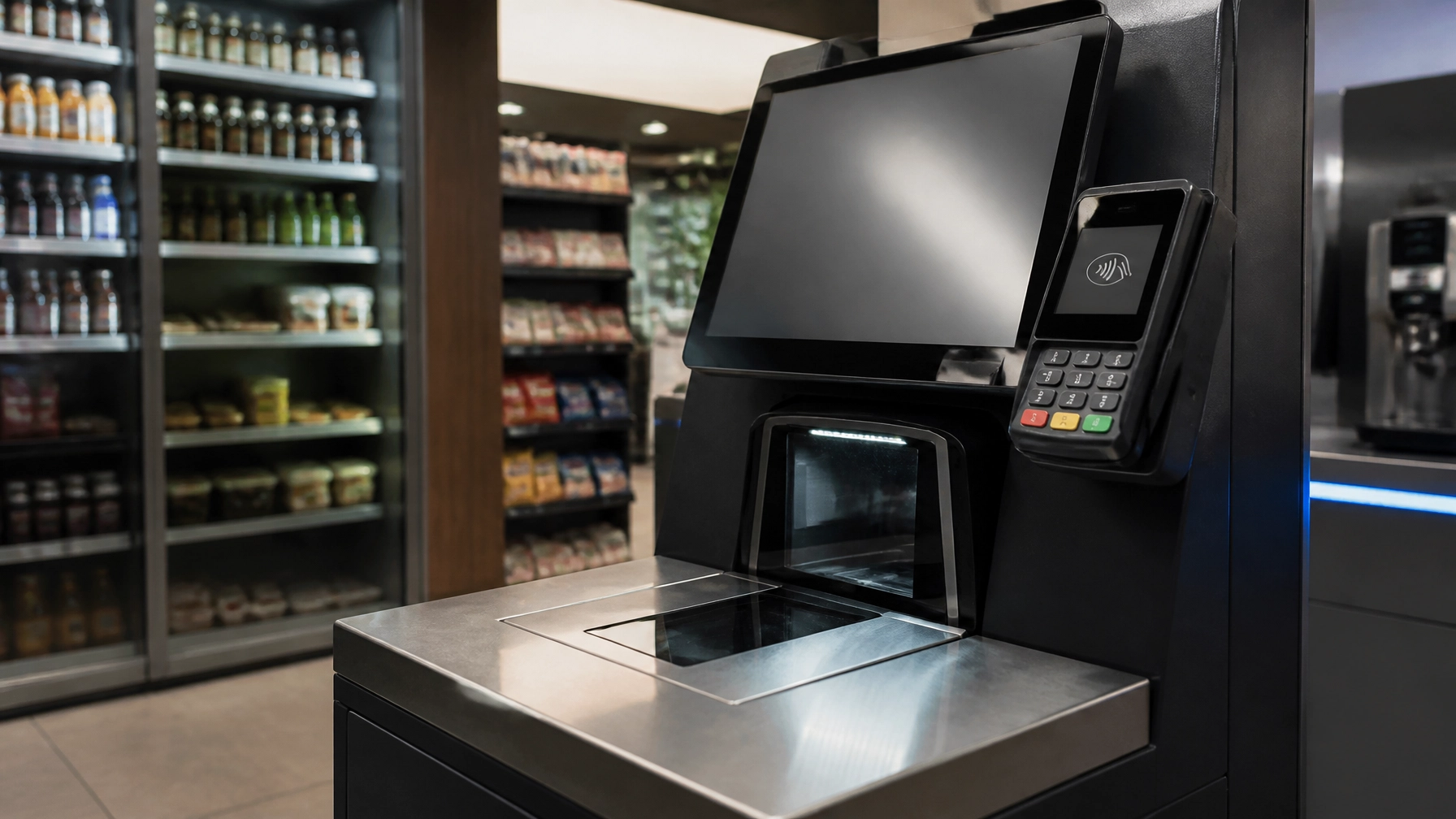
- The Self-Checkout Kiosk ($3,500–$7,500): This is the brain of your operation. Modern kiosks in 2026 include NFC readers for contactless payments, high-definition touchscreens, and often integrated cameras or weight scales to assist with security.
- Refrigeration ($2,000–$6,000 per unit): Most markets require at least one two-door cooler for beverages and one single-door cooler for fresh food. High-end smart coolers with auto-locking mechanisms and item-sensing technology can push this cost toward the higher end of the range.
- Fixtures and Shelving ($2,000–$5,000): This includes the ambient shelving for snacks, coffee stations, and the surrounds that give the market a professional, built-in look. Custom branding and LED lighting are standard for premium corporate accounts.
- Security and Surveillance ($1,500–$4,000): A robust camera system is non-negotiable. In 2026, many operators are opting for AI-enabled computer vision systems that can track movement and flag suspicious activity in real time.
- Inventory and Initial Stock ($1,000–$3,000): Because micro markets offer roughly seven times the selection of a vending machine, your initial fill requires more capital. This includes high-margin fresh food which must be managed carefully.
A useful way to think about micro market startup cost is to separate the project into visible and invisible expenses. Visible expenses are the things a client can see such as the kiosk, cooler doors, shelves, décor panels, and coffee station. Invisible expenses are the things that often catch new operators off guard such as freight, installation labor, networking, software onboarding, cable runs, local permits when required, and spoilage during the first 30 days while product mix is still being dialed in.
Real-World Kiosk Cost Examples
A basic freestanding kiosk package often lands in the $3,500 to $4,500 range when you buy a simpler touchscreen unit with a card reader, barcode scanner, and standard cabinet. This works well for smaller offices or a first market where speed to launch matters more than visual upgrades.
A mid-tier setup in the $5,000 to $6,500 range may include a larger screen, integrated loyalty support, stronger mounting hardware, branded side panels, cashless-first design, and better cable management. This is a common sweet spot for operators serving corporate offices and healthcare breakrooms.
A premium kiosk package in the $6,500 to $7,500 range can include backup battery support, integrated security camera mounting, ADA-conscious stand design, employee badge support, and higher-end display hardware built for constant use. These packages are often justified when bidding for larger accounts that expect a polished unattended retail experience.
Beyond the kiosk itself, operators should budget another $300 to $1,200 for installation-related items such as wall anchors, floor brackets, protective bollards where needed, ethernet runs, surge protection, and labor. A market that looks simple on paper can easily run above the quoted kiosk price once the setup is real.
Real-World Refrigeration Cost Examples
Refrigeration is one of the biggest drivers of both startup cost and product strategy. A standard single-door glass cooler may cost $2,000 to $3,200 depending on brand, finish, compressor quality, and delivery. A two-door beverage cooler may run $3,500 to $5,500. If you want matching units with premium lighting and a cleaner aesthetic for an office install, you may drift toward the upper end fast.
Fresh food programs usually need more than one temperature zone. That means your actual refrigeration plan may include a beverage cooler, a dedicated food cooler, and in some cases a freezer. A common three-piece cold package might look like this:
- One two-door beverage cooler at $4,500
- One single-door fresh food cooler at $2,800
- One small freezer or specialty refrigerated merchandiser at $2,200
That is already $9,500 before freight and setup.
Smart coolers increase cost but can reduce shrink in accounts where open access is risky. Those units can move above the standard range because you are paying for access control, door-lock logic, item recognition, and software integration. Operators usually justify the premium in hospitals, apartments, and certain mixed-access buildings where security matters more than lowest upfront cost.
Fixtures, Shelving, and Market Build-Out
Shelving prices vary more than many new operators expect. Basic gondola-style or wall-mounted shelving can start around $2,000 for a small footprint, but a more complete build with endcaps, coffee cabinetry, under-shelf lighting, and decorative panels can quickly climb to $4,000 to $5,000 or higher.
Here is where real-world scope creep often happens:
- Decorative surrounds to make the market look built-in
- Counter space for condiment stations
- Trash and recycling integration
- Custom trim to fit awkward room layouts
- Flooring touch-up or wall paint after removing old vending machines
- Sign holders, menu rails, and category markers
None of these items are individually huge, but together they can materially change the total micro market investment. A client who wants a premium breakroom look is rarely comparing you to a basic vending bank. They are comparing you to a small convenience retail experience inside their facility.
Security and Surveillance Budgeting
The listed $1,500 to $4,000 range is realistic, but the final number depends on how serious the site is about risk control. A simple camera setup with a few high-definition angles may stay near the low end. A more robust package with overlapping coverage, networked storage, remote viewing, and AI-assisted event tagging can climb quickly.
A practical entry-level security package may include:
- Two to three high-definition cameras
- Local recorder or cloud storage
- Signage
- Installation labor
A more advanced package may add:
- Cooler-focused camera angles
- Kiosk-side transaction view
- Shelf-line coverage
- Motion alerts during closed hours
- Software workflow for matching incidents to timestamps
If you inherit a location with poor sightlines, columns, or multiple entrances, your security budget should increase. Trying to save money on cameras at launch often costs more later through shrink and difficult investigations.
Inventory and Initial Stock Planning
The $1,000 to $3,000 estimate for initial fill is directionally right for a modest launch, but larger markets can open above that range depending on cooler count and fresh food mix. Beverage-heavy openings tend to require more cash than many first-time operators expect because drinks consume space and dollars quickly.
A sample opening order for a small to medium office market might include:
- Carbonated beverages and waters $400 to $700
- Energy drinks and functional beverages $150 to $300
- Chips, bars, candy, and pastries $250 to $500
- Fresh meals, salads, sandwiches, and yogurt $250 to $700
- Coffee, cups, creamers, and condiments $100 to $300
The challenge is not just the first fill. It is the fact that fresh food mistakes are expensive. If you overstock sandwiches, wraps, or salads before knowing traffic patterns, your spoilage rate can erase margin fast. Strong micro market operators start with variety but limit duplicate facings until they see live sales data.
Other Startup Costs New Operators Miss
A realistic micro market financial plan should also include:
- Freight and delivery charges
- Site survey and measurement time
- Electric upgrades if outlets are limited
- Internet backup such as 5G hotspot service
- First month software fees
- Credit card processing reserve timing
- Branded merchandising materials
- Cleaning tools and food-safe sanitation supplies
- Insurance adjustments for higher-value unattended retail equipment
These are not the glamorous parts of the project, but they are often the reason a market costs $6,000 to $10,000 more than a new operator expected.
Operational Costs and Fees
Beyond the hardware, you must factor in the recurring costs that impact your monthly bottom line. Card reader fees and transaction processing typically range from 3% to 6%, depending on your volume and provider. Additionally, micro market software platforms often charge a monthly fee per kiosk, which covers telemetry, remote inventory monitoring, and reporting tools.
Location commissions are another critical factor. In the vending world, commissions are often standard, but in the micro market space, many operators negotiate 0% to 15% commissions. Because you are providing a high-value employee benefit, essentially an on-site cafe, many locations are willing to waive commissions in exchange for better service or a wider fresh food selection.
Operators should also model labor in a more granular way than they would for a standard vending machine. A micro market can be more efficient on a revenue-per-stop basis, but it is also more demanding in merchandising, planogram maintenance, sanitation, freshness checks, and client communication. You are not only filling spirals. You are running a small store.
A realistic monthly operating budget often includes:
- Card processing at 3% to 6%
- Software subscription per kiosk
- Product cost of goods sold
- Commissions from 0% to 15%
- Driver labor and payroll burden
- Food spoilage reserve
- Cleaning and sanitation supplies
- Equipment maintenance
- Internet connectivity or cellular backup
- Insurance and admin overhead
Simple ROI Modeling Example
To make the numbers practical, consider a market installed in a 150-person manufacturing account.
Example startup cost
- Kiosk package $5,500
- Beverage cooler $4,200
- Food cooler $2,700
- Shelving and cabinetry $3,500
- Security package $2,000
- Initial inventory $2,000
- Freight, install, and setup $2,100
Total startup investment: $22,000. Assuming the market averages $8,500 in monthly gross sales at a 48% cost of goods, 4% processing, $180 software/connectivity, $1,450 labor/service, and a 5% commission, the estimated monthly operating profit is about $1,800 — a simple payback near 12 months. At $6,000/month payback stretches materially; at $10,000–$11,000/month with controlled shrink, it improves much faster.
Monthly simplified model
- Gross sales $8,500
- Cost of goods sold $4,080
- Processing at 4% $340
- Commission at 5% $425
- Software and connectivity $180
- Labor and service $1,450
- Miscellaneous supplies and waste $225
The lesson is simple. The market model works best when the location is strong enough to support the fixed cost structure.
Revenue Projection Scenarios
To model a micro market business responsibly, operators should forecast three cases instead of one.
Conservative Case
Modest foot traffic, limited night-shift activity, and no proven fresh food history.
- Monthly sales $4,500–$6,000
- Gross margin pressured by lower volume
- Break-even often 18 months or longer
Base Case
75 to 200 regular users, reliable on-site staff, and a balanced snack and beverage profile with some fresh food demand.
- Monthly sales $6,500–$9,000
- Healthy average basket size
- Break-even often 12–18 months
High-Performance Case
Multiple shifts, weak nearby food options, strong badge-controlled access, and management support for employee amenities.
- Monthly sales $9,500–$15,000+
- Better labor leverage per stop
- Faster payback and stronger valuation appeal
For those just starting out, we highly recommend the Operator Foundations course to learn how to model these financials before signing your first contract.
Essential Equipment for the Modern Market
Selecting the right hardware is about balancing aesthetics, reliability, and technology. In 2026, the equipment is smarter and more integrated than ever before.
The Payment Kiosk
The kiosk is the primary touchpoint for the customer. It must be intuitive and fast. Most modern units support multiple payment methods, including credit cards, mobile wallets (Apple Pay, Google Pay), and market cards or employee badges. Some high-security environments even utilize biometric checkout, such as palm or fingerprint scanning, to streamline the process for regular users.
When evaluating kiosks, operators should pay attention to more than the headline features. Screen brightness matters in rooms with natural light. Scanner quality matters when barcodes wrinkle on refrigerated labels. Reader placement matters for accessibility and checkout speed. Even simple things like printer access panels and cable routing can determine whether service calls are easy or annoying.
A good kiosk decision comes down to five questions:
- Is the checkout flow simple enough for a first-time user?
- Does the kiosk support every payment type your location expects?
- Can the hardware survive repeated daily use?
- Does the software sync reliably with inventory and reporting?
- Will the unit still look professional after a year in a busy breakroom?
Refrigeration and Cooling
Temperature control is the most important operational factor when selling fresh food. In 2026, Energy Star-rated coolers with LED lighting are the industry standard. Many operators now use smart coolers that remain locked until a payment method is authorized. Once the customer takes an item and closes the door, the system automatically detects what was removed and charges the customer. This significantly reduces shrink and ensures that food is kept at safe temperatures.
From an operations standpoint, refrigeration choices should align with your product strategy. If you plan to lead with bottled beverages and packaged snacks, a traditional open micro market plus standard coolers may be the most economical fit. If your location has elevated theft risk or sensitive access patterns, a smart cooler may become the better choice even if the upfront cost is higher.
Operators should also map serviceability before installation. Ask where the condenser exhaust will go, whether airflow is restricted, and how easily staff can clean the area around the unit. A premium cooler that overheats because it is boxed into a bad corner is not a premium investment for long.
Shelving and Layout Design
The layout of your market should follow retail best practices. Power items like popular beverages should be placed at the back to draw customers through the snack and fresh food aisles. Shelving should be adjustable to accommodate changing product sizes and seasonal rotations.
Good micro market layout design improves both sales and loss prevention. High-velocity beverages usually belong deeper in the footprint so customers pass other categories first. Fresh food should sit in a clearly visible zone with strong lighting. Small high-theft items should not live in low-visibility corners. Coffee and condiment stations need enough counter space to avoid clutter that makes the area look unmanaged.
A practical layout checklist includes:
- Clear line of sight from kiosk to coolers
- No blind corners behind shelving
- Easy replenishment access for drivers
- Product groupings by mission such as breakfast, snack, lunch, and energy
- Space for trash handling so the market stays clean
- Room for future expansion if the account grows
Micro Market vs. Smart Cooler vs. Traditional Vending
Operators often ask which unattended retail format makes the most sense for a location. The answer depends on traffic, space, security, and product goals.
| Format | Best Fit | Product Range | Upfront Cost | Security Profile | Customer Experience | Notes |
|---|---|---|---|---|---|---|
| Micro Market | Offices, manufacturing, hospitals, large breakrooms | Broadest mix of snacks, beverages, fresh food, and convenience items | Highest | Moderate without extra controls | Most flexible and retail-like | Best when traffic supports the investment |
| Smart Cooler | Apartments, mixed-access sites, smaller premium accounts | Strong for beverages, fresh food, and grab-and-go items | Mid to high | Stronger due to controlled access | Fast and modern | Great bridge format where open shelving is risky |
| Traditional Vending | Smaller sites, public areas, simple snack and beverage programs | Narrower but dependable | Lowest | Strong because product is enclosed | Familiar and simple | Best for lower-volume accounts or limited space |
The biggest strategic mistake is forcing a full micro market into a site that really wants the simplicity of vending or the controlled-access benefits of a smart cooler. Matching the format to the account almost always matters more than chasing the newest equipment.
Micro Market Software Platform Comparison
Software can make or break a micro market business because it affects replenishment accuracy, remote visibility, customer experience, and shrink investigation. The three names operators discuss most often are 365 Retail Markets, Cantaloupe, and Nayax.
| Platform | Common Use Case | Feature Highlights | Typical Pricing Approach | Pros | Cons |
|---|---|---|---|---|---|
| 365 Retail Markets | Established micro market operators and enterprise-style breakrooms | Kiosk ecosystem, self-checkout, reporting, loyalty options, broad market functionality | Usually custom quote based on hardware, software, and scope | Deep market experience, strong ecosystem, widely recognized in micro markets | Can feel more complex for very small operators; pricing often requires a direct sales process |
| Cantaloupe | Operators wanting integrated unattended retail tools across vending and markets | Market software, telemetry, payment integration, reporting, route visibility | Usually custom quote with hardware and recurring service components | Familiar brand in unattended retail, broad operator use, useful for mixed fleets | Final cost can vary by module and setup; feature depth may require onboarding time |
| Nayax | Operators focused on cashless payments and connected retail ecosystems | Payments, telemetry, loyalty tools, some market-related ecosystem capabilities | Usually custom quote based on devices, services, and transaction volume | Strong payments background, mobile and loyalty strengths, flexible ecosystem appeal | Micro market fit depends on exact deployment and partner stack; total solution structure can vary |
A few important notes about software platform selection:
- Most providers do not publish a simple one-size-fits-all price because final cost depends on hardware, transaction volume, modules, and support needs.
- The cheapest software is not always the lowest cost to operate if it creates poor pick lists, weak reporting, or slow support.
- A platform that works well for vending may not be the best choice for a fresh-food-heavy micro market operation.
- Ask for a live demo of reporting, product-level movement, refunds, and theft-audit workflows before you commit.
The right software should help you answer these operator questions in minutes:
- What sold today by location
- Which SKUs are close to stocking out
- Which products are expiring soon
- How much shrink is hitting each market
- Which accounts are worth upgrading or expanding
Ideal Locations for Micro Market Success
Not every location that hosts a vending machine is a fit for a micro market. Because the model relies on an open environment, you need a semi-secured or controlled population.
Corporate Offices
The tech and professional services sectors are the bread and butter of the micro market industry. Any office with 50 to 500 employees is a prime candidate. These locations typically have a culture of wellness and are looking for healthy, fresh options for their teams.
Office accounts tend to perform best when employees are on-site multiple days per week and when outside food options are limited by time, parking, or campus layout. A modern breakroom with a fresh-food-focused micro market can also support recruiting and retention goals, which gives your sales pitch more substance than just snacks.
Manufacturing and Distribution Centers
Factories and warehouses are excellent locations because employees often have limited break times and cannot easily leave the site for food. These sites require hardened equipment that can withstand high-traffic use. Providing hearty, fresh meals like wraps or pasta bowls can lead to high transaction volumes during shift changes.
Manufacturing locations are often some of the best micro market business opportunities because shift structures create predictable demand. Breakfast traffic, lunch peaks, and second-shift meal replacement behavior can produce strong all-day sales when the assortment is built correctly.
Healthcare and Hospitals
Hospitals operate 24/7, making unattended retail a necessity for night-shift staff and visitors. Micro markets in healthcare settings often focus on high-protein snacks, premium coffee, and quick-meal options. Because these are high-traffic areas, security is a major consideration, often requiring the use of smart coolers or gated access.
Healthcare accounts also reward reliability. If a nurse breakroom market is empty at 2 a.m., the account will hear about it. Operators serving hospitals need disciplined service schedules, strong in-stock execution, and food safety processes that hold up under scrutiny.
Residential Lobbies and Apartment Complexes
A growing trend in 2026 is the placement of micro markets in the common areas of high-end apartment buildings. This provides residents with 24/7 access to essentials like milk, eggs, and quick snacks without needing to visit a traditional convenience store.
Residential accounts can work, but they require careful format selection. In many cases, a smart cooler plus limited shelving may outperform a full open market if access is less controlled or if overnight theft risk is elevated.
Step-by-Step Location Scouting Checklist
Finding the right location is one of the biggest factors in micro market profitability. A beautiful install in the wrong building still struggles. A simpler setup in the right building can turn into a great account. Use this checklist before presenting a final proposal.
1. Confirm User Count
Start with actual population, not optimistic estimates. Ask how many people are on-site daily, how many work each shift, how many visitors, contractors, or residents use the area, and how many days per week the location is fully active. A location with 250 employees on paper but only 80 on-site per day is not the same as a true 250-person account.
2. Study Break Patterns
Traffic concentration matters. You want to know when breaks happen, whether lunch waves are staggered or clustered, if overnight or weekend shifts exist, and whether the breakroom is used consistently. Markets often perform best where employees have short breaks and limited time to leave.
3. Check Nearby Food Competition
Map the food alternatives within a realistic break window: walkable fast food, an on-site cafeteria, food trucks, convenience stores, and employer-subsidized meal programs. If workers can easily leave and return with a full meal in 15 minutes, your fresh food plan needs to be stronger.
4. Evaluate Security and Access Control
Before promising an open market, inspect badge access, lobby access rules, public traffic, camera coverage opportunities, and existing theft issues on-site. If the room is open to the public or sits on a poorly monitored traffic path, a smart cooler or vending-first design may be the smarter recommendation.
5. Measure Space and Utilities
Do not rely on rough estimates. Confirm exact wall measurements, door widths for delivery, available outlets, dedicated circuits if needed, hardwired internet or acceptable cellular backup, and floor condition and leveling. Many install delays come from preventable site-survey mistakes.
6. Review Client Goals
Different accounts want different outcomes. Ask whether the client's main priority is a better employee amenity, healthier choices, reduced vending complaints, stronger overnight access, an upgraded breakroom appearance, or lower service headaches. Your product mix, format, and pricing strategy should follow their goal.
7. Validate Financial Fit
Finally, ask whether the site can realistically support the capital. If the projected volume does not support the build-out, adjust the format before installation rather than after disappointment.
Case Studies of Successful Transitions
The strongest proof for a micro market often comes from real operating scenarios. Here are a few representative transition examples operators can learn from.
Case Study 1 — Small Office Upgrade
A professional services office with about 90 regular on-site staff had two older vending machines generating roughly $1,900 per month combined. Complaints centered on stale snacks, limited healthy options, and frequent card reader issues. The operator replaced the vending bank with a compact micro market featuring one kiosk, one beverage cooler, one food cooler, and one shelving run. Fresh sandwiches, salads, protein snacks, premium coffee items, and better beverage variety were introduced.
Within four months, monthly sales increased to about $3,700, average basket size improved because staff bought drinks plus food together, commission remained at 0% because the client viewed the market as an employee amenity, and the operator reduced refund complaints significantly. The biggest lesson was not just product selection. It was the visual reset. The new setup made the breakroom feel intentionally managed.
Case Study 2 — Manufacturing Site Conversion
A 220-person manufacturing account with two shifts had long relied on snack and beverage machines that produced around $4,200 per month. Employees had limited time to leave the property, and management wanted better meal options. The operator installed a larger micro market with stronger fresh food capacity and a more substantial meal assortment including wraps, breakfast sandwiches, yogurt, pasta bowls, energy drinks, and hydration products. Security included multiple cameras and visible signage.
Within six months, monthly sales climbed to about $8,900, lunch and second-shift transactions became major drivers, shrink settled near 3% after camera placement and product layout adjustments, and the estimated payback period tightened to roughly 13 months. The important takeaway was that labor scheduling changed with the market. The operator moved from broad, less frequent fills to tighter, more data-driven replenishment.
Case Study 3 — Healthcare Breakroom Hybrid
A hospital staff area wanted broader access to food overnight but had concerns about open-market theft because of round-the-clock activity. Instead of pushing a full open layout immediately, the operator proposed a hybrid model with a kiosk, limited open shelving, and more secure refrigerated access for higher-value food.
Within the first quarter, sales outperformed the old vending setup by a wide margin, higher-value fresh items performed better because access control reduced loss, client satisfaction improved because staff finally had credible overnight meal options, and the operator gained a roadmap for phased expansion instead of forcing a full redesign on day one. This case shows that the best micro market strategy is not always all-or-nothing. Hybrid planning often wins.
Operational Strategy: Inventory and Security
The primary challenge of a micro market, as compared to traditional vending, is the management of an open inventory. Without a glass barrier, you are susceptible to shrink (theft or loss).
Managing Shrink and Security
Most micro markets operate with a 2% to 5% shrink rate. While this sounds high to a traditional vending operator, the increased revenue usually more than compensates for the loss. To keep shrink under control, operators use a combination of tactics:
- Video Surveillance: High-definition cameras should be placed to cover the kiosk, the coolers, and the shelving.
- Signage: Clear signage reminding customers that the area is monitored is a powerful deterrent.
- Audit Tools: Using AI-powered software to cross-reference transactions with video footage can help identify missed scans.
- Location Choice: Limiting open markets to closed-loop environments (where only employees have access) is the most effective security measure.
In practice, theft prevention works best when it is built into the full operating workflow rather than treated as one piece of hardware. A camera alone does not stop shrink. A camera plus visible sightlines, fast audits, good product placement, and client communication can.
Security Protocol Walkthrough
A strong micro market security protocol usually follows the same sequence every week.
1. Design for Visibility
Before launch, position the kiosk and shelves so there are no easy blind spots. If a customer can stand behind tall shelving, away from the kiosk, next to poorly lit coolers, you are inviting trouble. The most successful layouts make the space feel open, observed, and easy to navigate.
2. Install Overlapping Camera Angles
Do not settle for one wide shot. Use overlapping views that capture the kiosk interaction zone, the primary cooler doors, the main shelf area, and the entry and exit path where possible. This matters because many loss events are not dramatic theft. They are partial transactions, skipped scans, or accidental nonpayment that you can only understand by matching movement to checkout timing.
3. Use Product Placement as a Security Tool
High-risk products should not be hidden low or off to the side. Energy shots, premium protein drinks, high-ticket fresh meals, and compact specialty items deserve visible placement. Sometimes moving a category just a few feet closer to the kiosk improves accountability.
4. Set a Shrink Review Rhythm
Do not wait until month-end to ask why the numbers are off. Strong operators review variance weekly and sometimes daily on new installs. Compare what the software says sold against what physical counts show. If one category is repeatedly off, investigate quickly before the pattern becomes expensive.
5. Train Drivers to Spot Security Issues
Route personnel are your field intelligence. They should report camera obstructions, broken signage, repeated open packaging, consistent mismatches in one zone, cooler doors not closing correctly, and traffic flow changes caused by furniture or renovations. Shrink often starts with small operational drift, not one major event.
6. Escalate with the Client Early
If a location shows persistent theft, bring the facility contact into the process early. Share timestamps, patterns, and the practical options available. Depending on the account, that may mean more cameras, room access changes, employee reminders, shifting to a hybrid format, or locking down a premium category inside a smart cooler.
Real Theft-Prevention Strategies That Work
Operators who keep shrink under control tend to use the same practical playbook.
- Keep the kiosk on the natural exit path. Customers should pass the kiosk as the obvious final step. If it is off to the side, skipped checkout becomes easier both intentionally and unintentionally.
- Limit blind-corner shelving. Low-visibility ends of gondolas are risky for small premium items. Use those spots for lower-risk products or redesign the footprint.
- Start with tighter fresh food counts. Fresh meals are profitable, but they also carry both shrink and spoilage risk. Tighten counts until you know the location.
- Post clear, professional signage. You do not need aggressive language. Calm, direct signage that the market is monitored and that transactions are reviewed is often enough to deter casual abuse.
- Use smart coolers selectively. If a site has weak access control or repeated theft in refrigerated products, smart cooler placement can protect your margin without eliminating the fresh food opportunity.
- Audit refunds and voids. Frequent refunds, voids, or transaction interruptions can reveal friction points or abuse patterns. Review them as part of normal operations.
AI-Driven Inventory Management
In 2026, successful operators do not guess what to stock. They use telemetry and AI forecasting to predict demand. Remote inventory monitoring allows you to see exactly what has sold in real time. This means your route drivers only bring the specific products needed to restock the market, increasing driver productivity by up to 40% compared to traditional vending routes.
Dynamic pricing is another tool used to maximize profitability. If fresh sandwiches are nearing their expiration date, the system can automatically apply a discount to encourage a sale, reducing waste and protecting your margins.
The best inventory systems help with more than restocking. They support assortment discipline. Instead of carrying too many similar products, operators can see what actually turns by daypart, by season, and by location type. That means more data-backed decisions around SKU rationalization, premium item trials, and fresh food expansion.
A strong replenishment process usually looks like this:
- Review sales and low-stock alerts before the route leaves
- Pull only the required products plus limited backup units
- Rotate every fresh item by date at the market
- Capture physical count exceptions immediately
- Adjust facings after repeated over- or under-performance
- Review spoilage and shrink weekly by category
When this rhythm is consistent, the micro market business becomes easier to scale because each stop is driven by information rather than guesswork.
Profitability Analysis and Revenue Growth
The ROI for a micro market is typically faster than a vending machine, despite the higher initial cost. Most locations break even within 12 to 18 months.
Revenue Multipliers
The reason micro markets are so profitable is the basket size. In a vending machine, a customer usually buys one item. In a micro market, the open retail environment encourages impulse buys. A customer might stop for a coffee but leave with a salad, a snack bar, and a sparkling water. The average transaction value in a micro market is often double or triple that of a vending machine.
There are usually four revenue multipliers working at once:
- More SKUs available at one stop
- Better fresh food participation
- Higher average ticket from multi-item purchases
- More dayparts served, especially breakfast, lunch, and second shift
That combination is why an account that looked average under vending can become much more attractive under a well-run micro market model.
Revenue Projection Framework
When building a micro market revenue forecast, estimate sales by mission rather than just by total headcount.
Beverage Mission
This includes water, soda, energy drinks, sports drinks, coffee, and functional beverages. Beverage turns are often the foundation of the account.
Snack Mission
This includes chips, candy, bars, nuts, pastries, cookies, and better-for-you snacks. Snack categories provide dependable volume and margin diversity.
Meal Mission
This includes sandwiches, wraps, salads, yogurt, breakfast items, and premium grab-and-go products. Meal participation is what often separates an okay market from a strong one.
Convenience Mission
This includes over-the-counter medications, personal care items, and emergency convenience products. This category may be smaller, but it can increase the usefulness of the market and boost basket size.
Sample Monthly Revenue Model
Here is a basic example for a healthy 180-person office and warehouse hybrid account:
- Beverages $3,200
- Snacks $2,100
- Fresh meals and breakfast $2,800
- Convenience and sundries $400
Projected monthly sales: $8,500. If average gross margin after product cost is around 48% to 52%, and labor is controlled through efficient routing, the location can support a strong profit profile. If fresh food underperforms badly, the same location may still survive on beverages and snacks, but the return on the micro market investment usually slows.
What Improves ROI Faster
Operators who improve payback periods usually do a few things well:
- Open in locations with enough real traffic
- Launch with a clear product strategy instead of random assortment
- Keep out-of-stocks low on top sellers
- Use weekly reporting to manage spoilage early
- Limit shrink through layout and audit discipline
- Negotiate lower or zero commission when the market serves as an employee amenity
Valuation and Exit Strategy
If you are building a route with the intention of selling it, micro markets are highly attractive to buyers. The industry valuation multiple for a healthy vending operation typically ranges from 2.0x to 3.5x SDE (Seller's Discretionary Earnings). However, routes with a high percentage of micro market accounts often command the higher end of that range because of the predictable revenue and modern technology.
Buyers generally like micro markets when they see stable account retention, strong software reporting, controlled shrink, and reasonable labor systems. They become more cautious when markets depend too heavily on one fragile fresh-food program or when client relationships are weak. In other words, modern equipment helps, but disciplined operations are what protect the value of the route.
Transitioning from Vending to Micro Markets
If you are an existing operator with a fleet of traditional machines, the transition to micro markets should be strategic rather than immediate.
Step 1: Identify Your Top Accounts
Look for your highest-performing vending locations. Any site generating $1,000 or more per month in vending revenue is a candidate for a micro market upgrade. These sites already have the foot traffic; you are simply providing them with a better retail experience. Also review non-revenue indicators that point to upgrade potential:
- Frequent sold-out complaints
- Requests for healthier products
- Strong beverage-only demand that suggests more basket potential
- Breakroom renovations underway
- HR or facilities teams focused on employee perks
Step 2: Pitch the Benefit to the Client
When speaking with the facility manager, focus on the amenity factor. A micro market is an employee perk. Highlight the fresh food options, the faster checkout, and the ability to customize the product mix to meet their specific needs (e.g., more vegan or gluten-free options). A stronger client pitch usually includes:
- A simple before-and-after visual concept
- Sample product categories tailored to the location
- Expected service frequency
- Security overview
- Clear explanation of whether commission is expected
- What success will look like after 30, 60, and 90 days
Step 3: Plan the Installation
A micro market requires more floor space than a vending bank. You may need to coordinate with the location's facilities team to ensure you have the necessary power and internet connectivity. Most kiosks require a hardwired ethernet connection for maximum reliability, though many now use 5G cellular backups. The best installations are treated like project management jobs, not simple equipment drops. Confirm delivery path, staging area, outlet placement, internet test, cooler settling time, merchandising sequence, and launch communication with the client.
Step 4: Launch with a Controlled Product Mix
Do not overcomplicate day one. Start with a broad but manageable assortment, then let the data tell you what deserves more facings. Too many SKUs at launch creates clutter and overbuying.
Step 5: Review Performance at 30 Days
Your first month should answer a few key questions: which categories are winning, which fresh items are underperforming, whether break patterns match expectations, whether shrink is inside target, and whether the client wants assortment changes. The transition is successful when you keep optimizing after install rather than assuming the first assortment is final.
Vendor and Supplier Partnerships
A micro market is only as strong as the supply chain behind it. Strong vendor and supplier partnerships affect product quality, fill rates, freshness, pricing, and your ability to test new categories without wrecking margin.
Why Supplier Strategy Matters
Operators often focus heavily on equipment, but product sourcing is what customers experience every day. If your beverage distributor misses key SKUs, your fresh food partner delivers inconsistent shelf life, or your snack supply is too expensive to price competitively, the market feels weak no matter how good the kiosk looks.
Core Supplier Categories
Most operators build around a mix of supplier types:
- Broadline distributors for snacks, drinks, and staples
- Local fresh food partners for sandwiches, wraps, salads, and breakfast
- Club or cash-and-carry sources for gap fills and urgent items
- Specialty suppliers for healthy snacks, functional beverages, premium coffee, or regional favorites
- Equipment and service partners for refrigeration, parts, and repairs
What to Look for in a Supplier
A strong supplier relationship should improve operations in measurable ways. Evaluate partners on fill rate consistency, delivery frequency, shelf-life quality on arrival, case pack flexibility, new product access, margin impact, and responsiveness during stockouts or recalls. A cheap case cost is not helpful if the product arrives short-dated or unreliable.
Fresh Food Partnership Best Practices
Fresh food is where supplier quality matters most. Ask prospective partners what the typical shelf life is on delivery, how date labels are applied, whether product can be customized by client type, what minimum order volumes apply, how credits are handled for quality issues, and how often menus can rotate. The best fresh food partners help you build a repeatable program, not just drop sandwiches at your warehouse.
Negotiating for Growth
As your micro market business grows, revisit supplier terms. Better volume can create leverage around pricing, delivery windows, promotional support, and new item trials. Suppliers are not just vendors. The best ones become practical operating partners who help you stay in stock and relevant.

Future Trends: AI and Robotics in 2026
As we look toward the end of the decade, the integration of AI will only deepen. We are already seeing the rise of robotic micro markets, where a robotic arm can prepare fresh coffee or even assemble a salad on-site.
Sustainability is also becoming a major driver for the industry. Many corporate accounts now require operators to use eco-friendly packaging and energy-efficient equipment. Operators who lean into these trends, providing locally sourced food and reducing their carbon footprint, will find it easier to win high-end contracts.
We are also seeing operators use smarter pricing, tighter route optimization, and better product analytics to run micro market locations with more precision than ever before. The future is not just flashy hardware. It is better decision-making supported by cleaner data.
The move toward unattended retail is inevitable. Consumers want speed, selection, and a touchless experience. For the operator, this represents the greatest opportunity for growth since the invention of the card reader.
Conclusion
Micro markets represent the future of the vending industry. They offer higher revenue, better customer engagement, and more sophisticated operational data than traditional machines. While the startup costs of $15K to $50K are higher, the return on investment and the increased valuation of your business make it a necessary move for any operator looking to scale in 2026.
By focusing on high-traffic locations, investing in the right security tech, and using data-driven inventory management, you can build a highly profitable and modern operation. The key is to start with your best locations and grow methodically, always keeping the customer experience at the center of your strategy.
Frequently Asked Questions
What is the average cost to start a micro market in 2026? A typical micro market installation ranges from $15,000 to $50,000. This includes the payment kiosk, refrigeration units, shelving, and initial inventory. The price varies based on the level of technology and the size of the location.
How do I prevent theft in an open micro market? Security is managed through high-definition surveillance, clear signage, and sometimes smart coolers that lock. Most operators also limit micro markets to closed-loop environments like offices where the customer base is consistent and known.
Do micro markets make more money than vending machines? Yes, industry data shows that micro markets typically generate 80% to 100% more revenue than traditional vending machines in the same location. This is due to a larger product selection and a higher average transaction value.
What kind of locations are best for micro markets? The best locations are semi-secured environments with at least 50 to 100 people. This includes corporate offices, manufacturing plants, hospitals, and high-end residential complexes.
How often do I need to restock a micro market? Because micro markets often carry fresh food, they usually require more frequent servicing than vending machines, often two to four times per week, depending on the volume and spoilage rates.
What is the typical commission for a micro market? Commissions in the micro market space are generally lower than in vending, ranging from 0% to 15%. Many locations waive the commission entirely because the market is viewed as a high-value employee benefit.
How many employees do I need for a micro market to make sense? There is no universal threshold, but many operators look for at least 50 to 100 regular users and strong on-site activity. The better question is whether the location has enough daily traffic and enough unmet food demand to support the capital investment.
What is a good monthly sales target for a micro market? A healthy target depends on the format and the account, but many operators look for at least $6,500 to $9,000 per month for a standard market to feel strong. Larger manufacturing and healthcare accounts can exceed that materially.
Should I choose a micro market or a smart cooler? Choose the format based on security, space, and product needs. A full micro market works best when the location can support open access and broader assortment. A smart cooler is often better when refrigerated products are the main opportunity and access control matters more.
How much shrink is normal in a micro market? Many operators plan around roughly 2% to 5% shrink, though strong layouts, controlled access, audits, and smart cooler use can improve performance. Persistent shrink above that range should trigger a review of layout, cameras, and account fit.
What products perform best in a micro market? Top categories usually include beverages, energy drinks, chips, protein snacks, candy, breakfast items, sandwiches, wraps, salads, and premium coffee add-ons. Exact winners vary by location type and shift structure.
How important is fresh food to profitability? Fresh food is often a major growth driver because it raises basket size and supports lunch and breakfast demand. It also requires tighter inventory control because spoilage can eat into margins if the menu is too broad or the replenishment cycle is too loose.
Do I need special software for a micro market business? Yes, software is a major part of the model. Operators need visibility into sales, inventory, product movement, spoilage, and shrink. The right micro market software also supports route planning, reporting, and faster decision-making.
Can I transition an existing vending account into a micro market? Yes, and that is often the best path. Existing vending accounts already provide usage history, client familiarity, and traffic clues. The key is choosing locations with enough demand and presenting the upgrade as a better employee amenity and retail experience.
What should I ask a fresh food supplier before partnering? Ask about shelf life, date labeling, delivery schedule, menu flexibility, minimums, credits for quality issues, and how quickly they respond to stock or quality problems. Consistency matters as much as menu variety.
How long does it take to break even on a micro market? Many markets break even in about 12 to 18 months, but that varies based on startup cost, monthly sales, commission structure, shrink, labor, and fresh food execution. A strong location with disciplined operations can pay back faster.
Can apartment buildings support a micro market? Yes, but format choice matters. Some residential properties can support a full market, while others are better served by a hybrid setup or smart cooler approach because access control and overnight shrink risk are different from office settings.
Connect With the Vending Community
If you're ready to connect with other operators or find a supplier for your first market, find the right community room via the Vending Community Guide — TVC's curated map of the industry's active communities. Connecting with peers is the fastest way to learn the ropes of this growing industry.
Keep reading
- Cashless and Smart PaymentsCashless readers, telemetry, and smart payment systems: costs, providers as a category, and ROI math.Read the guide
- Choosing a Product SupplierDistributor types, account minimums, how suppliers build their price, delivery terms, and the nine questions to ask before opening an account.Read the criteria
- Choosing Vending EquipmentNew vs. refurbished vs. used, sizing capacity to your service interval, MDB and DEX compatibility, and the parts channel behind the sale.Read the criteria