

Vending Operators8 min read
On this page
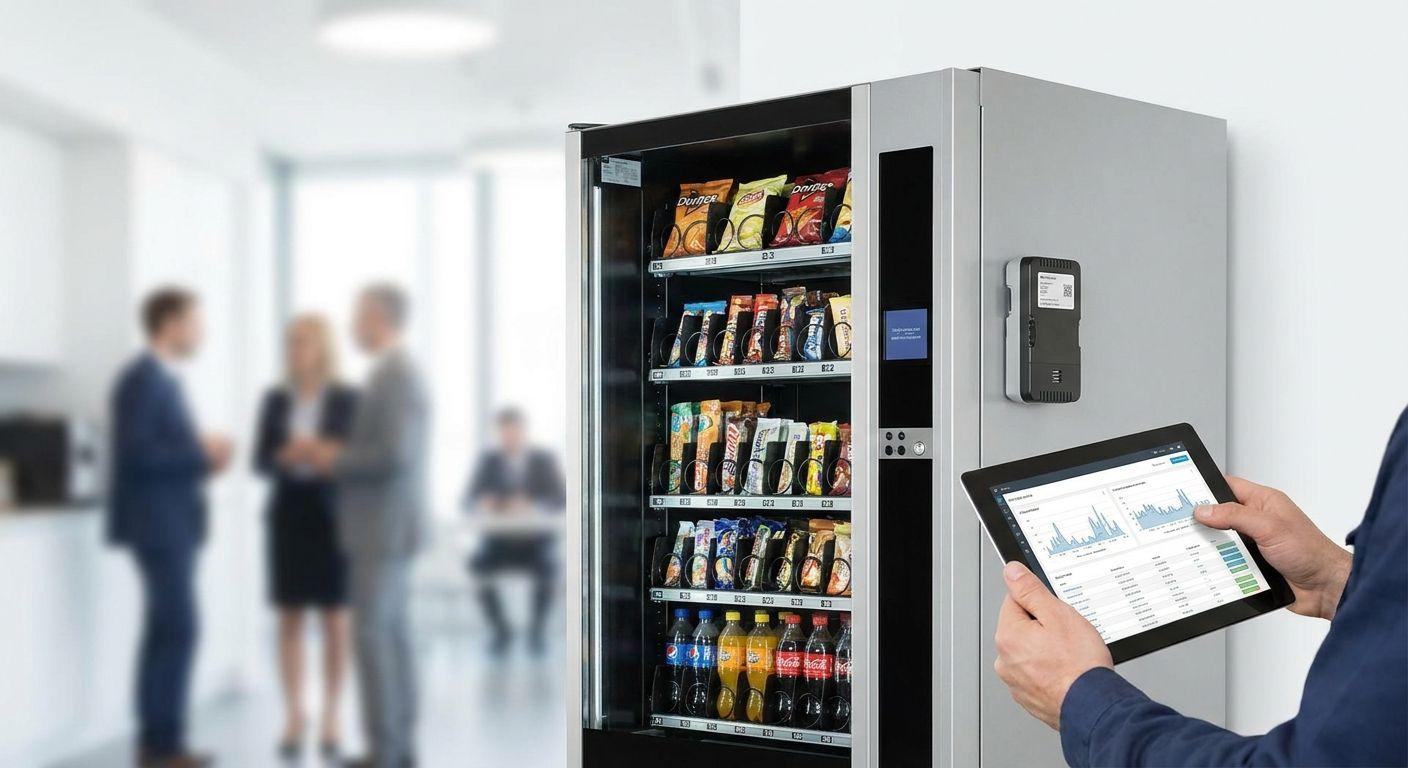
Vending machine telemetry can send supported sales, inventory, cash, temperature, and fault data to remote software. This guide compares current options and the practical checks U.S. operators should make in 2026.
TL;DR- Vending telemetry options fall into three broad groups: Payment systems with monitoring, vending management platforms that accept telemetry data, and standalone devices that transmit machine data.
- DEX (Data Exchange) is a standard format used to move vending audit data, while telemetry is the connection that sends data to a remote system.
- Before buying hardware, confirm the machine interface, cellular generation, software integration, and who owns the device and data.
- Compare providers against the same written checklist. Features, compatibility, and contract terms vary by product and can change.
Why this matters
Without remote data, an operator usually learns about a stockout, payment fault, or temperature problem through a scheduled visit or a report from the location. Telemetry can surface supported machine data between visits, but the available alerts depend on the machine, device, connection, and software.
NAMA describes DEX as an electronic audit file generated by the vending machine controller, and its standards work supports moving vending data between systems. Provider capabilities are separate from that standard. Cantaloupe documents remote sales, pre-pick, and machine-health functions for its current telemetry product. Nayax documents inventory, cash monitoring, alerts, reporting, and route-planning functions for its AMIT 3.0 product. Those examples show why buyers should compare the exact current product rather than assume every device reports the same fields. The directory and tools at The Vending Club can help operators organize that review before committing to a contract.
What to look for in a telemetry system
- Machine data: Identify which DEX, MDB, sensor, payment, or controller data the system can read and export from each machine.
- Connectivity type: Cellular (4G LTE), Wi-Fi, or a hybrid. Cellular works on routes without reliable venue Wi-Fi but requires an ongoing data plan.
- Alert granularity: Does it flag jam errors and low cash only, or also temperature swings for refrigerated machines and low-stock by slot?
- Bundled vs. standalone: Bundled systems tie telemetry to a specific cashless payment processor; standalone units report data regardless of which payment hardware you run.
- Software integration: Whether the data feeds into route accounting or inventory software you already use, or requires a separate login.
- Contract structure: Hardware ownership versus lease, and whether telemetry is a flat add-on or billed per transaction. Confirm current terms directly with each provider since pricing structures change.
Telemetry and remote monitoring systems at a glance
| Option to evaluate | Documented capabilities to confirm | Contract or compatibility question |
|---|---|---|
| Nayax telemetry products | Inventory, cash monitoring, alerts, reports, route planning, and supported machine interfaces | Which functions require specific hardware, software, or payment services? |
| Cantaloupe telemetry products | Remote sales data, pre-pick support, machine-health alerts, and connection to Seed | Which machine models and software packages support each function? |
| PayRange VendSights | Remote machine and inventory views, route tools, maintenance visibility, and integrations described by PayRange | Which existing devices integrate, and what is charged per connected device? |
| Other telemetry or management products | Capabilities vary by device and software | Can the supplier demonstrate data export, alert delivery, and support on your exact machine? |
Nayax: Telemetry for operators who want one vendor
Nayax publishes telemetry products for unattended machines. Its AMIT 3.0 page lists inventory, cash monitoring, alerts, reports, route planning, remote device control, and several machine interfaces, including DEX and MDB. That does not mean every Nayax device or every machine supports every function.
Questions to ask Nayax:
- Which device supports your machine make, model, controller, and payment setup?
- Which data fields appear in the current dashboard, and how often do they update?
- Can you export machine, product, alert, and transaction data in a usable format?
- Which hardware, software, cellular, processing, and support charges apply?
Good fit when: the demonstrated hardware and software cover the operator's payment and monitoring requirements under acceptable written terms.
Cantaloupe (Seed): Telemetry tied to route software
Cantaloupe, formerly USA Technologies, publishes the G11 telemeter and Seed software. Its telemetry page states that the current product uses 4G cellular connectivity and can support remote sales information, pre-pick orders, reporting, and machine-health alerts. Compatibility and software access still need to be confirmed for the operator's exact setup.
Questions to ask Cantaloupe:
- Does the proposed device work with each machine controller and installed payment reader?
- Which Seed package is required for inventory, pre-pick, reporting, and alert functions?
- What happens to historical data and exports if the service ends?
- Who handles installation, cellular failures, replacement hardware, and software support?
Good fit when: the operator wants the documented telemetry functions and verifies the complete hardware, software, processing, and support arrangement in writing.
PayRange: Vending management and monitoring questions
PayRange publishes VendSights as a vending management system with remote machine views, inventory visibility, maintenance information, route planning, and integrations with cashless and telemetry devices. Its current product page also lists pricing that starts per connected BluKey device, but operators should request a dated quote because packages and charges can change.
Questions to ask PayRange:
- Which installed payment and telemetry devices can feed VendSights without replacement?
- What data is available at machine, selection, product, and transaction level?
- Which functions are included in the quoted package, and which require other hardware?
- Can the operator export data and retain historical records after cancellation?
Good fit when: the operator verifies that VendSights accepts the existing device mix and supplies the required route, inventory, and reporting functions.
Standalone DEX telemetry add-ons: Monitoring without a new cashless system
A separate telemetry device may be an option when an operator wants remote machine data without replacing a working payment setup. The result depends on three layers: The data the machine can produce, the interface the device can read, and the software that receives and displays the data.
Questions for any standalone supplier:
- Can the supplier demonstrate the device on the exact controller and payment configuration?
- Does it read DEX, MDB, or another supported interface, and which fields are available?
- Is the cellular service included, and what network generation does the unit use?
- Does the software export raw and summarized data without a proprietary lock-in?
- Who owns the device, SIM, account, and historical records at the end of the agreement?
Good fit when: testing confirms that the separate device adds the needed data without disrupting payments or creating duplicate service charges.
How to compare systems for your route
Start with the machines, readers, and software already installed. Give each supplier the same equipment list and required-data checklist, then compare written responses. Do not assume a brand name or product category establishes compatibility. Test payment reporting, machine data, alerts, exports, and support on a small pilot before changing the full route.
Route size alone does not decide the answer. Build a simple before-and-after case using your own records: Visits per month, miles, driver hours, stockouts, service calls, spoilage, and time between an alert and a completed repair. Compare those costs with the full quoted cost of hardware, installation, cellular service, software, payment processing, support, and replacement units. Do not use a vendor's general payback claim as your route forecast.
Compatibility check before purchase
Start with an inventory of each machine's manufacturer, model, controller, serial number, installed reader, DEX port status, and location connectivity. Ask the supplier to mark each machine as supported, unsupported, or requiring a retrofit. For a refrigerated machine, confirm whether the proposed setup reads an actual temperature sensor or only reports controller faults. For inventory, ask whether the system receives item-level sales, calculated par levels, or only total machine revenue.
Run a pilot on different machine types rather than the easiest unit on the route. During the pilot, compare dashboard records with a physical cash count, product count, known test vend, door opening, and deliberately generated service alert. Record any delayed, missing, or duplicated data. A successful login is not proof that the full route will report accurately.
Contract and data-control check
Request one written schedule showing the device price, installation charge, recurring connection fee, software fee, payment-processing terms, minimum term, renewal, early termination, replacement policy, and support response. Identify who owns the hardware and whether a replacement or transfer fee applies if a location closes.
Also ask for a sample export before signing. The file should let you identify the machine, location, date, transaction or audit period, product or selection where available, and alert type. Confirm how long history remains available and whether exports continue after notice of cancellation. If a platform connects to route accounting or inventory software, test the export or integration with a small data set before committing the full fleet.
The decision should rest on measured route costs and a documented pilot. The downtime guide can help structure tracking, but your own machine and service records should determine whether telemetry creates enough value.
Check current operator resources
Browse the free directory and tools before signing a telemetry contract.
Read the cashless guideOne last thing
Before troubleshooting a silent machine, verify power, controller communication, device status, network coverage, cellular generation, account status, and software access. A remote dashboard can only show data that every layer successfully produces and transmits.
Sources
- NAMA, 12 Terms Every Vendor Needs to Know, for DEX, vending management systems, and wireless terminology.
- NAMA, Technology and VDI Standards, for current industry standards resources.
- Cantaloupe, Telemetry, for documented G11 connectivity, sales, pre-pick, reporting, and machine-health functions.
- Nayax, AMIT 3.0 Telemetry, for documented interfaces, inventory, cash monitoring, alerts, reports, and route-planning functions.
- PayRange, VendSights, for documented remote monitoring, inventory, route, maintenance, integration, and current pricing information.
This comparison is not an exhaustive list of providers or products. Product capabilities and terms can change, so verify current documentation and a written quote for the exact machines in your route.
Get new vending guides in your inbox
The Vending Club publishes new operator guides most days. The free General Updates newsletter goes out every Friday with the week's new articles, and nothing else. You choose the updates you want, we confirm by email before sending anything, and you can unsubscribe at any time.
Related guides
Common questions
- What is a vending machine telemetry system?
It is a combination of machine data, a connected device, and software that lets an operator review supported information remotely. Available sales, inventory, cash, temperature, and fault data varies by setup.
- Is DEX the same as telemetry?
No. DEX is a vending audit-data format. Telemetry is the connection and system used to move supported machine data to remote software.
- Do I need a separate telemetry system if I already use a payment provider?
Check the current hardware and software first. Some payment products include or connect to monitoring functions, while other setups may require an additional device or software package.
- How much does vending telemetry cost in 2026?
Compare the full written cost: Hardware, installation, cellular service, software, processing, support, replacement, minimum term, and cancellation. Current charges vary by provider and package.
- Can telemetry reduce vending machine downtime?
An alert may help an operator learn about a supported fault sooner, but the result depends on accurate data, alert settings, and the speed of the service response. Measure the effect with your own route records.
- What connectivity should I check?
Confirm the device's cellular generation or Wi-Fi requirements, coverage at each location, offline behavior, and responsibility for replacing hardware that loses network support.
- Does telemetry work on older vending machines?
Age alone does not answer this. Verify the controller, interfaces, installed payment hardware, sensor support, and any required retrofit with the supplier before purchase.