

Vending Operators8 min read
On this page
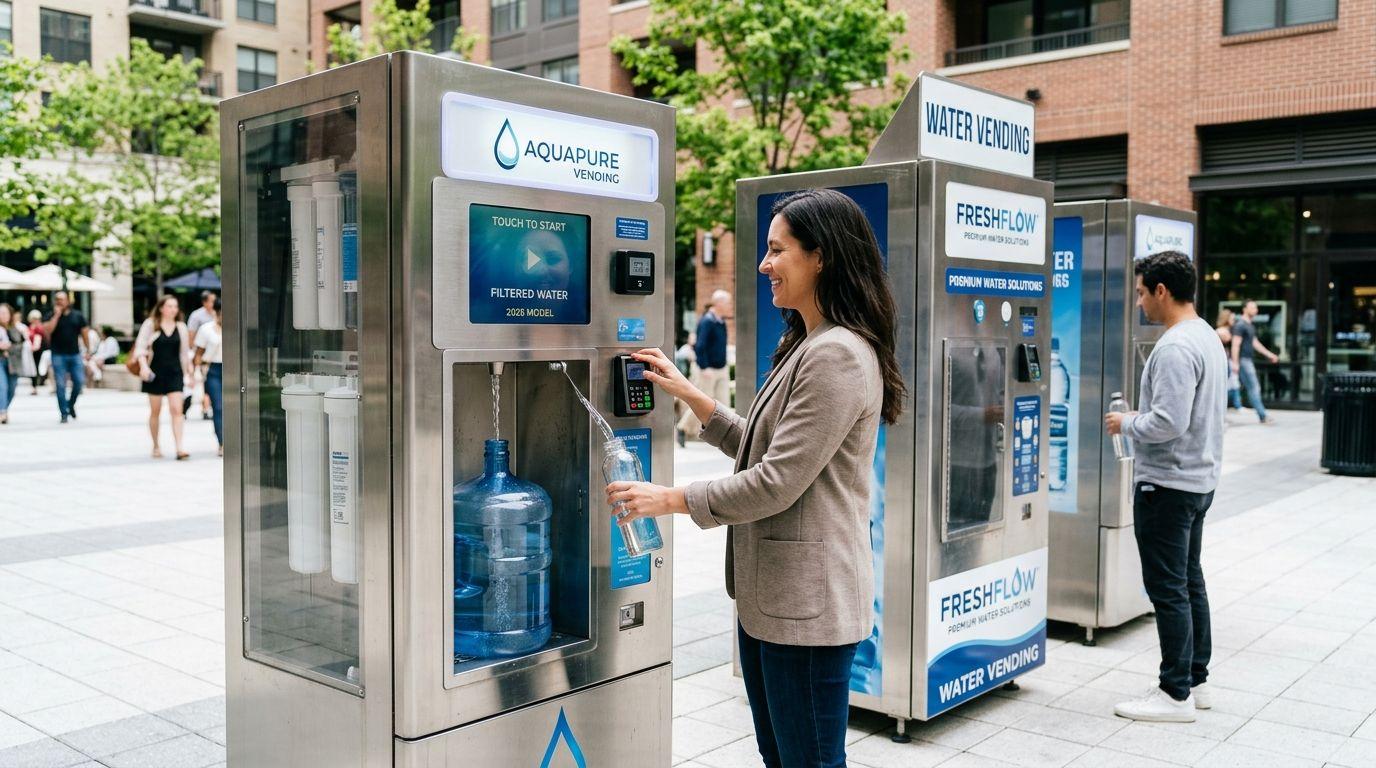
Water vending machine suppliers are not a single category of business. Depending on what a site needs, an operator might be dealing with a reverse-osmosis kiosk manufacturer, a bulk water refill equipment maker, a bottleless cooler distributor, a franchise program, or a dealer selling refurbished units, and each of those comes with different plumbing, permitting, and service requirements for 2026.
TL;DR- Water vending machine suppliers split into five common categories: RO kiosk manufacturers, bulk refill equipment makers, bottleless cooler distributors, franchise programs, and refurbished equipment dealers.
- Reverse-osmosis systems are commonly built to the NSF/ANSI 58 standard, which affects filtration performance and certification claims.
- Site plumbing, drain access, and local health permitting matter more for water vending than for snack or drink vending.
- No single supplier category fits every location; the right choice depends on water source, foot traffic, and whether the operator wants to own or lease equipment.
- Financing, leasing, and location-finding decisions for water vending machines follow the same logic used across other vending equipment categories.
“A water vending machine that needs a dedicated water line and drain changes the site-selection math more than almost any other equipment decision an operator makes.”
Why this matters
Water vending machines are not interchangeable with snack or beverage vending in terms of installation requirements. Most units that dispense purified or filtered water for refill, whether by the gallon or into a reusable bottle, need a connection to a water line and often a drain, which snack and cold-drink machines usually do not require.
That single difference is why comparing water vending machine suppliers starts with the equipment category, not the brand name. An operator placing a unit in a grocery store entryway has different plumbing access than one placing a unit in an office break room, and the supplier categories below are built around that distinction.
The sections that follow describe common categories of water vending equipment suppliers active in the U.S. market as of 2026. They are not ranked against each other, and other suppliers and business models exist beyond the ones described here.
What to evaluate before choosing a supplier category
- Water source and plumbing access. Does the site have a dedicated water line and drain, or will the machine need to run on refillable internal tanks.
- Filtration and certification. Reverse-osmosis systems are commonly built to the NSF/ANSI 58 standard for drinking water treatment systems; ask any manufacturer whether their unit is certified to that standard or an equivalent one.
- Permitting and health department rules. Water vending machines often fall under state or local health code requirements that differ from general vending equipment rules; requirements vary by state.
- Ownership structure. Outright purchase, lease, or franchise agreement each carry different upfront cost, contract length, and exit terms.
- Service and filter maintenance. Filter replacement schedules and service response time vary by manufacturer and should be confirmed directly with each supplier rather than assumed.
- Payment and telemetry compatibility. Cashless payment and remote monitoring integration is now standard on many newer water vending units in 2026, but not universal on older or refurbished equipment.
Water vending machine suppliers at a glance
| Category | Typical fit | Standout feature | Key consideration |
|---|---|---|---|
| Reverse-osmosis kiosk manufacturers | High-volume retail refill stations | Multi-stage filtration built around the NSF/ANSI 58 standard | Requires a dedicated water line and drain at the site |
| Bulk water refill equipment suppliers | Laundromats and grocery entryways | Coin, bill, and cashless payment built into gallon-fill dispensing | Plumbing and permitting complexity is higher than snack vending |
| Bottleless cooler and micro-market water suppliers | Office break rooms and micro markets | Fits into an existing break room vending route | Lower throughput than a dedicated retail kiosk |
| Franchise and turnkey water vending programs | New operators who want standardized equipment | Bundled equipment, signage, and route-building support | Territory rules and contract terms vary widely between programs |
| Refurbished and used equipment dealers | Operators expanding on a limited budget | Lower upfront capital than new manufacturer equipment | Warranty coverage and parts availability vary by dealer |
1. Reverse-osmosis kiosk manufacturers: Suited to high-volume retail refill stations
These suppliers build free-standing kiosks that treat tap water on-site through multiple filtration stages, typically including sediment filtration, carbon filtration, and reverse osmosis membrane treatment. Machines in this category are usually plumbed directly into a building's water supply and require a drain line for reject water.
Reverse-osmosis kiosk pros:
- High daily throughput suited to grocery stores, big-box retailers, and high-traffic strip malls
- Filtration systems are commonly built around the NSF/ANSI 58 standard for reverse osmosis treatment
- Lower per-gallon operating cost once the unit is installed and running
Reverse-osmosis kiosk cons:
- Installation requires plumbing and drain access, which not every site can provide
- Higher upfront equipment cost than bottleless coolers or small refill units
- Filter and membrane replacement adds a recurring maintenance line item
Typical fit: operators with access to sites that already have plumbing infrastructure and enough foot traffic to justify a dedicated kiosk.
2. Bulk water refill equipment suppliers: Suited to laundromats and grocery entryways
This category covers manufacturers of coin- and card-operated dispensers designed to fill customer-supplied jugs or bottles, often in five-gallon increments. These units are common outside grocery stores, at laundromats, and in some convenience store parking areas.
Bulk refill pros:
- Straightforward payment flow built around cash, coin, and increasingly cashless readers
- Familiar format for customers who already buy bottled or bulk water regularly
- Works well as a standalone outdoor unit without needing indoor floor space
Bulk refill cons:
- Outdoor placement means more exposure to weather and vandalism
- Permitting requirements for outdoor water equipment vary by city and state
- Service visits are needed more frequently than for indoor equipment
Typical fit: operators targeting outdoor, high-traffic retail entryways where customers already expect a water refill station.
3. Bottleless cooler and micro-market water suppliers: Suited to office break rooms
Bottleless coolers connect to an existing water line and filter tap water for drinking, without the coin-operated dispensing format of a retail kiosk. Some suppliers in this space also fold water service into micro-market and break room vending routes alongside snack and drink options.
Bottleless cooler pros:
- Fits naturally alongside an existing office break room or micro-market vending route
- No jug delivery or storage required, unlike traditional bottled water cooler service
- Smaller footprint than a retail refill kiosk
Bottleless cooler cons:
- Lower daily throughput than a dedicated retail kiosk
- Still requires a water line connection, even if not a coin-op payment system
- Revenue model is often service-fee based rather than per-gallon, which changes the math for an operator used to coin vending
Typical fit: operators already running vending machine companies for office break rooms style routes who want to add water service without a separate site visit structure. Other break room vending providers not covered in this category may offer comparable water service options.
4. Franchise and turnkey water vending programs: Suited to new operators
Some water vending equipment providers package machines, signage, training, and sometimes territory rights into a franchise or licensing agreement. This model trades a higher contract commitment for a more standardized starting point.
Franchise program pros:
- Bundled training and support can shorten the learning curve for a first water vending route
- Standardized equipment and branding across a program's operators
- Some programs include help with initial location-finding services as part of the package
Franchise program cons:
- Territory restrictions can limit where an operator is allowed to place machines
- Contract length and exit terms vary significantly between programs and should be read closely before signing
- Ongoing fees reduce per-location margin compared to independently sourced equipment
Typical fit: operators entering water vending for the first time who want a structured program rather than sourcing equipment and locations independently.
5. Refurbished and used equipment dealers: Suited to budget-conscious expansion
Dealers who sell refurbished or used water vending machines give operators a lower-cost entry point, particularly for expanding an existing route rather than starting from zero.
Refurbished equipment pros:
- Lower upfront capital requirement than buying new from a manufacturer
- Can be a reasonable way to test a new location before committing to new equipment
- Some dealers offer machines already compatible with common cashless payment retrofits
Refurbished equipment cons:
- Warranty coverage, if any, is typically shorter and less comprehensive than on new equipment
- Parts availability depends heavily on how common the original model is
- Filtration components on older units may not meet current certification standards, so this should be confirmed directly with the seller
Typical fit: operators who already understand water vending operations and are optimizing for lower acquisition cost on a second or third unit.
How these categories are grouped
The five categories above are organized around two variables: How the machine sources and treats water (plumbed-in versus refillable), and how the equipment is acquired (new purchase, lease, franchise, or refurbished). Those two variables drive most of the practical differences operators run into, from permitting to service cost, more than brand name does.
Which category fits your situation
There is no single best water vending machine supplier category for every operator in 2026. A site with plumbing access and heavy foot traffic points toward a reverse-osmosis kiosk. A site without plumbing access but strong outdoor traffic points toward a bulk refill unit. An office break room route points toward a bottleless cooler. A first-time operator without existing supplier relationships may lean toward a franchise program, and a cost-conscious operator adding a second unit may look at refurbished equipment.
The categories above do not cover every water vending machine supplier operating in the U.S. market, and other providers and business models exist beyond what is described here. Confirming certification claims, contract terms, and service commitments directly with each supplier remains the operator's responsibility before signing anything.
Compare vending equipment resources
Browse operator guides and directory listings across vending equipment categories.
Browse the supplier directoryOne last thing
The plumbing question gets skipped more often than it should. Operators who scout a location based on foot traffic alone, then find out afterward that the site has no accessible water line or drain, end up either paying for costly plumbing work or switching to a bottleless or refillable-tank unit they hadn't planned for. Confirming water and drain access during the site walkthrough, before signing any location agreement, avoids that entire problem in 2026 and beyond.
Sources
- NSF International, NSF/ANSI 58 reverse osmosis drinking water treatment systems standard
- U.S. EPA, Safe Drinking Water Act overview
- FDA, Bottled Water Everything You Need to Know
Get new vending guides in your inbox
The Vending Club publishes new operator guides most days. The free General Updates newsletter goes out every Friday with the week's new articles, and nothing else. You choose the updates you want, we confirm by email before sending anything, and you can unsubscribe at any time.
Related guides
Common questions
- What is a water vending machine supplier?
A water vending machine supplier is a company that manufactures, distributes, leases, or sells equipment that dispenses filtered, purified, or bulk water for a fee. Suppliers in this space range from reverse-osmosis kiosk manufacturers to franchise programs and refurbished equipment dealers.
- Do water vending machines need NSF certification?
Reverse-osmosis water vending systems are commonly built to the NSF/ANSI 58 standard for drinking water treatment, though certification requirements can vary by state and local health department. Confirm certification status directly with the manufacturer before purchase.
- Can you lease a water vending machine instead of buying it?
Yes, some suppliers offer leasing arrangements for water vending equipment similar to leasing options available for other vending machine categories. Lease terms, buyout options, and maintenance responsibilities vary by provider and should be compared before signing.
- What permits are required for a water vending machine?
Permit requirements for water vending machines vary by state and often fall under health department rules separate from general vending equipment permits. Operators should check with their state's health or agriculture department before installing a unit.
- How is a bulk water vending machine different from a bottleless cooler?
A bulk water vending machine dispenses water by the gallon into customer-supplied containers, usually outdoors and coin-operated, while a bottleless cooler filters tap water for on-demand drinking indoors without a per-gallon payment structure. The two serve different site types and customer behaviors.
- Are refurbished water vending machines a reliable option?
Refurbished water vending machines can lower upfront cost, but warranty coverage and parts availability vary significantly by dealer. Filtration components on older units should be checked against current certification standards before installation.
- How often do water vending machine filters need to be replaced?
Filter replacement intervals vary by manufacturer, usage volume, and local water quality, so there is no single standard schedule. Check the specific maintenance guidance provided by the equipment manufacturer for the model in use.
- Where can operators compare vending equipment financing options?
Operators can review general financing and leasing considerations that apply across vending equipment categories, including water vending machines, through industry guides covering financing companies and leasing terms.