

Vending Operators8 min read
On this page
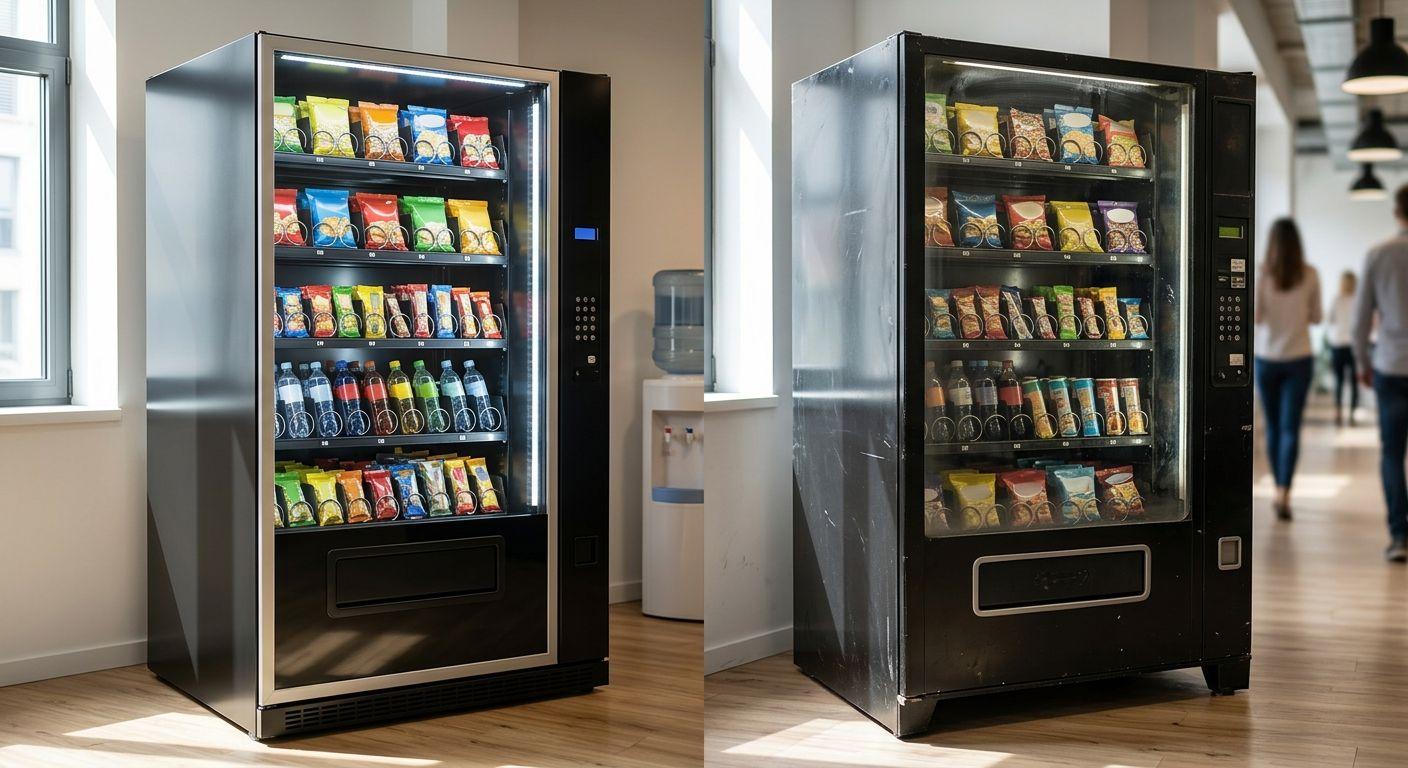
Whether new or used vending machines make sense depends on upfront budget, verification effort, and how much warranty coverage matters to you, not on one option being inherently better than the other. New machines carry manufacturer warranties and current payment technology out of the box, while used machines lower the initial cash outlay but shift maintenance-history verification and payment-system upgrades onto the buyer.
TL;DR- New vs used vending machines split mainly on upfront cost, warranty coverage, and who verifies maintenance history.
- Used equipment purchases require checking service records and cashless payment compatibility before paying.
- Financing and equipment deductions apply to both new and used machines, but documentation requirements differ.
- ADA placement rules for coin slots and card readers apply the same way regardless of machine age.
Why this matters
The vending equipment market includes new machines direct from manufacturers, refurbished units from resellers, and used machines sold operator-to-operator. In 2026, all three paths are common ways operators add machines to a route, and none of them is the wrong choice by default. What changes the outcome is whether the buyer verifies condition, payment-system compatibility, and service history before money changes hands.
The member directory and operator tools at The Vending Club list calculators and resources operators use to compare financing terms, evaluate location contracts, and check equipment sources, without pushing any single seller or machine type. The decision between new and used equipment usually comes down to four things: Cash available now, tolerance for unknown repair costs, how quickly a machine needs to go on location, and whether the buyer can actually check a used unit's maintenance records before committing to it.
Is it better to buy new or used vending machines?
Neither new nor used vending machines is the correct choice in every situation. The right fit depends on the factors below, and other equipment sources beyond the ones compared here, including regional distributors and equipment brokers, may also be worth checking before deciding.
| Factor | New machines | Used machines |
|---|---|---|
| Upfront cost | Higher purchase price, sometimes offset by a financing or leasing agreement | Lower purchase price, but repair or refurbishing costs can add up afterward |
| Warranty | Manufacturer warranty typically included | Depends entirely on what the seller offers, often limited or none |
| Maintenance history | No prior operating history to check | Requires requesting service and repair records before paying |
| Payment technology | Cashless readers and telemetry usually installed and current | May need a card reader or telemetry upgrade to meet current processing standards |
| Depreciation and tax treatment | Fresh cost basis starting at purchase | Cost basis and prior depreciation depend on documentation the seller provides |
| Lead time | Ordered through a manufacturer or distributor, can involve a wait | Often available for pickup or delivery right away |
These differences apply broadly across snack, beverage, combo, and bulk vending machines. Specialized equipment, such as frozen food or ice vending machines, can carry additional condition-check requirements because of refrigeration components that wear differently than a standard snack unit.
New vending machines
New vending machines come from a manufacturer or an authorized distributor and typically include a manufacturer warranty covering parts, and sometimes labor, for a defined period. Because the machine has no operating history, there's no maintenance record to request or verify, and current models generally ship with cashless payment readers and telemetry already installed or ready to add.
The tradeoff is cost. New equipment usually requires either a larger upfront payment or a financing or leasing agreement, and lead times from order to delivery can run longer than picking up a used machine locally. Financing terms, contract lengths, and equipment coverage vary by lender, so comparing more than one financing source before signing is worth the time rather than accepting the first offer.
New equipment is typically suited to operators who want predictable warranty coverage, don't want to spend time verifying a used unit's history, or need machines that already meet current payment-processing standards without a retrofit. It's also a common route for operators placing machines under a contract that specifies newer equipment, such as some school or hospital vending agreements.
Used vending machines
Used vending machines are sold by operators exiting a route, equipment brokers, or online marketplaces, and prices are generally lower than new equipment because the buyer takes on more of the condition risk. Before paying for a used machine, requesting maintenance logs, refrigeration service records for cold or frozen units, and documentation on any payment-system upgrades already installed gives a clearer picture of what's actually being bought. What records to request when buying used vending equipment covers the specific documents worth asking a seller for before handing over a deposit.
Used machines are typically suited to operators working with a tighter budget, needing a machine placed on location quickly, or willing to handle a payment-system upgrade or minor repair themselves. The risk runs the other direction too: A machine with no service records, or a seller who won't answer basic condition questions, can end up costing more in repairs and downtime over 2026 and beyond than a new machine would have cost outright.
How a seller responds to documentation requests is one of the clearer signals of how the rest of the transaction will go. A seller who provides service logs, a repair history, and a straight answer about why the machine is being sold is generally easier to evaluate than one who deflects those questions.
Refurbished vending machines: A middle option
Between new and fully used equipment, refurbished machines occupy a middle position. A refurbished unit is a used machine that's had components replaced or rebuilt, such as compressors, coin mechanisms, or card readers, before resale. Pricing sits between new and straight used equipment, and some resellers offer a limited warranty on the refurbished parts even when the rest of the machine carries no coverage.
The same verification approach applies here as with any used purchase: Ask specifically what was refurbished, request documentation on the work performed, and confirm which parts (if any) carry a warranty versus which parts are sold as-is. A reseller who can itemize what was replaced is generally a more transparent option than one who only advertises the machine as "refurbished" without specifics.
Check equipment before you buy
Review the buyer checklist before paying a deposit on any machine.
Browse the supplier directoryWhy the new-vs-used decision varies
The factors below are the ones that most often shift an operator from one option to the other. Weighing them against your own route plans and budget is more useful than treating either option as a default.
- Budget and financing access. Cash on hand versus needing a financing or leasing agreement changes which option is realistic for a given purchase.
- Warranty expectations. New machines generally include manufacturer coverage; used machines depend entirely on what an individual seller is willing to offer in writing.
- Verification effort. Used machines require requesting and reviewing maintenance and repair records; new machines simply don't have a history to check yet.
- Payment technology. Some used machines need a cashless reader or telemetry upgrade to meet current card-processing standards, while new machines usually ship current out of the box.
- Tax and depreciation treatment. How a purchase is depreciated, and whether it qualifies for equipment deductions, can differ based on the documentation the seller provides at sale. Can you write off a vending machine purchase on your taxes walks through what documentation the IRS looks for when claiming equipment deductions in the 2026 tax year.
- Placement requirements. ADA rules require operable parts like coin slots, card readers, and selection buttons to sit between 15 inches and 48 inches from the floor, and this applies the same way to new and used machines placed in public buildings.
“A machine's age isn't the strongest predictor of downtime, its documentation is.”
Related questions
Is it cheaper to buy a used vending machine than a new one?
Used vending machines typically cost less upfront than new machines, but the total cost depends on repair, refurbishing, and payment-system upgrade expenses the buyer takes on after the sale. A used machine with no service records can end up costing as much as a new one once those repairs are factored in over 2026's operating costs.
Do used vending machines come with a warranty?
Warranty coverage on used vending machines depends entirely on the seller; some equipment brokers offer a limited parts warranty, while private operator-to-operator sales often come with none. New machines generally include a manufacturer warranty as part of the purchase, which is one of the clearest cost differences between the two options.
Can you finance a used vending machine purchase?
Financing is available for both new and used vending machines, though terms, down payment requirements, and which lenders will finance older equipment vary by provider. Comparing financing options before committing to a specific machine helps confirm which purchase price range is realistic for a given route and budget.
One last thing
A machine's age isn't the strongest predictor of how much downtime it causes. A five-year-old machine with complete service records and a working telemetry connection can be a more reliable purchase in 2026 than a two-year-old machine with no paperwork and an unknown repair history.
Before comparing price tags, ask every seller, new or used, for the same three things: Warranty terms in writing, maintenance or service records, and confirmation of current payment-system compatibility. The answers to those three questions usually matter more to the total cost of ownership than whether the machine came off a factory line or a previous operator's route.
Get new vending guides in your inbox
The Vending Club publishes new operator guides most days. The free General Updates newsletter goes out every Friday with the week's new articles, and nothing else. You choose the updates you want, we confirm by email before sending anything, and you can unsubscribe at any time.
Related guides
Sources
- U.S. Access Board, "2010 ADA Standards for Accessible Design" (2010): https://www.ada.gov/law-and-regs/design-standards/2010-stds/
- Internal Revenue Service, "Publication 946, How To Depreciate Property": https://www.irs.gov/publications/p946
- Internal Revenue Service, "About Form 4562, Depreciation and Amortization": https://www.irs.gov/forms-pubs/about-form-4562
Common questions
- How do you decide between buying new or used vending machines?
The decision comes down to available budget, warranty expectations, and how much time you can spend verifying a used machine's condition before buying. Operators who want manufacturer warranty coverage typically buy new, while those working with a tighter budget and willing to verify records often buy used.
- How do you verify a used vending machine's maintenance history?
Request service logs, repair invoices, and refrigeration maintenance records for cold or frozen units directly from the seller before paying a deposit. A seller who can't produce basic maintenance documentation is a signal to ask more questions or look elsewhere.
- How do you know if a used vending machine will accept modern payment systems?
Ask the seller whether the machine already has a cashless card reader and telemetry installed, and confirm which payment processors it's compatible with. Machines without a current card reader usually need a hardware upgrade before they can accept tap-to-pay transactions.
- Can vending machine purchases be written off on taxes?
Vending machine purchases can qualify for equipment deductions under IRS rules, but the exact treatment depends on how the machine is classified and documented. Checking current IRS guidance, or working with a tax preparer familiar with equipment purchases, confirms what applies for the 2026 tax year.
- Do used vending machines come with any warranty coverage?
Warranty coverage on used machines depends on the seller: Some equipment brokers offer a limited parts warranty while private sales often include none. New machines generally include manufacturer warranty coverage as part of the purchase price.
- How do you compare financing options for new vending machines?
Compare down payment requirements, contract length, and what happens to the equipment if payments stop, across more than one financing source before signing. Terms vary enough between lenders that a side-by-side comparison usually changes which option looks most workable.
- What questions should you ask a seller before buying a used vending machine?
Ask for maintenance and repair records, confirm what payment technology is installed, and find out why the machine is being sold. Sellers who answer directly and provide documentation are generally easier to evaluate than ones who can't.
- How do you check whether a vending machine meets ADA placement requirements?
Confirm that operable parts like coin slots, card readers, and selection buttons fall within the accessible reach range of 15 to 48 inches from the floor, per ADA design standards. This requirement applies to new and used machines alike whenever they're placed in a public building.