

Vending Operators6 min read
On this page
Good vending machine locations share four traits: Steady foot traffic, a set group of people with regular access to the machine, little or no competing vending equipment nearby, and a location contact willing to sign a written placement agreement with clear commission terms. Finding vending machine locations in 2026 usually means combining cold outreach, referrals, and sometimes a paid locator service, then verifying the traffic claims before committing equipment and cash to the spot.
TL;DR- Finding vending machine locations means qualifying foot traffic, break access hours, and competition before signing anything.
- Workplaces, apartment complexes, schools, and hotels are common location categories operators evaluate in 2026.
- Locator services and direct outreach both work; a written placement agreement matters more than the channel used.
- ADA accessibility rules apply to vending equipment placed in public buildings under federal design standards.
- Verifying a location's actual traffic before installing equipment prevents wasted machine placement and low sales.
Why this matters
A vending machine only earns money when enough people walk past it with cash, a card, or a mobile wallet in hand and a reason to use it. Two locations can look similar on paper, a 40-person office and a 40-unit apartment building, and perform completely differently based on break schedules, on-site hours, and whether a cafeteria or corner store already covers the same need.
Operators who treat location scouting as a one-time task tend to end up with a route full of underperforming stops. Checking a vending industry directory for general operator resources, templates, and state-level guidance is a reasonable starting point before approaching a property manager or facilities contact, since it helps frame what questions to ask and what a fair placement agreement typically includes.
How do you find vending machine locations?
There is no single required process, but operators generally work through the same sequence of steps regardless of whether they are placing a snack machine, a bulk vending unit, or a micro market.
- Identify the target category. Office break rooms, apartment clubhouses, schools, gyms, auto shops, and hotels all have different traffic patterns and different decision-makers.
- Build a short list of prospects. This can come from driving a territory, checking commercial listings, working from a referral network, or contracting a locator service that specializes in cold outreach.
- Contact the decision-maker directly. In most workplaces this is a facilities manager, office manager, or property manager, not the front desk staff.
- Ask about headcount, hours, and existing vending or food service. A location with a subsidized cafeteria or an existing multi-machine vendor already in place is a harder sell.
- Negotiate commission and placement terms in writing. Verbal agreements create disputes later over commission rates, restocking access, and who owns the machine if the relationship ends.
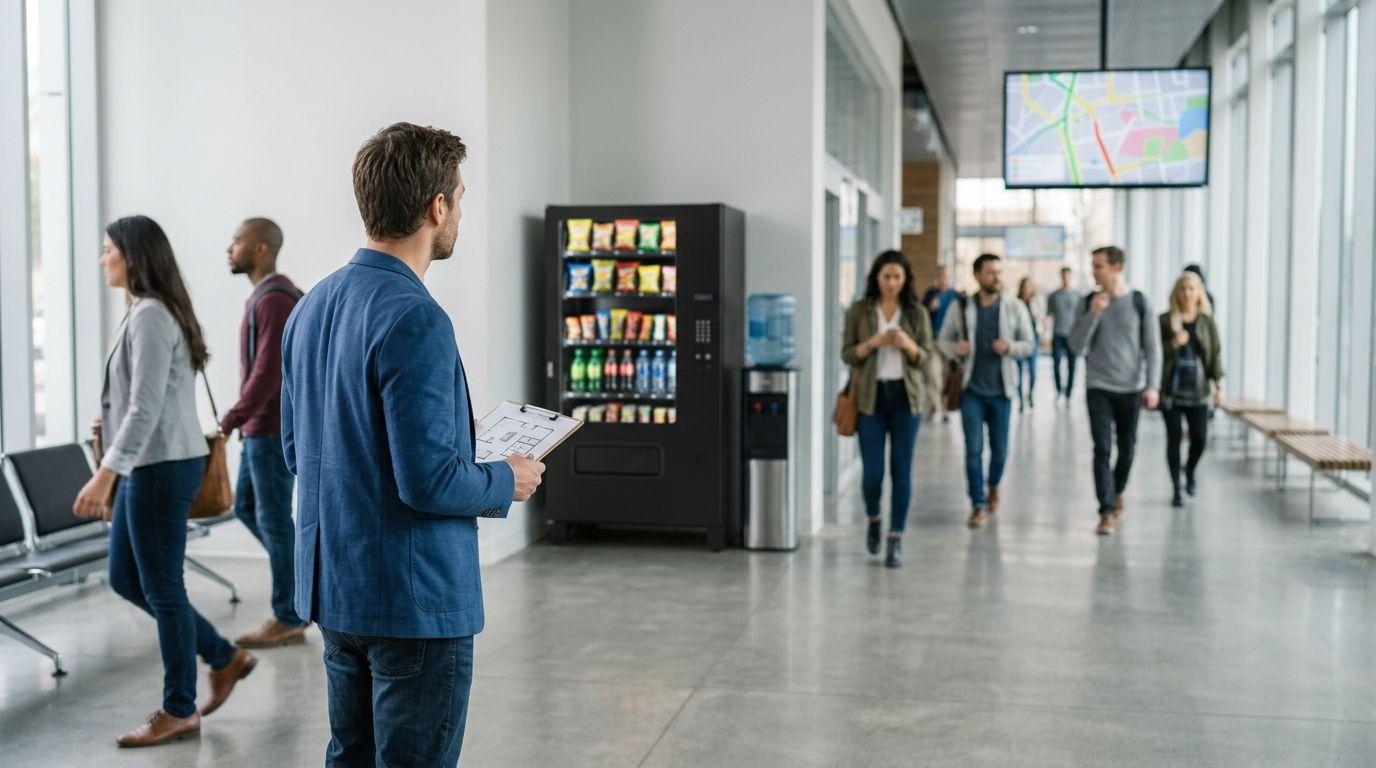
- Verify the location before installing equipment. Confirming actual foot traffic and access hours, rather than relying on the contact's estimate, reduces the chance of placing a machine somewhere it will not perform. A step-by-step approach to this is covered in how to verify a proposed vending location.
A written agreement covering commission, term length, and access hours protects both sides more than any single scouting technique.
Types of locations vending operators evaluate
Different property types come with different expectations around commission, contract length, and machine type. None of the categories below is inherently better than another; fit depends on the operator's route size, machine inventory, and service capacity.
Workplace break rooms
Offices and light-industrial workplaces are a common starting point for new operators because decision-making usually rests with one facilities or office manager. Headcount, shift patterns, and whether the employer already subsidizes food service are the main variables that determine whether a break room is worth pursuing.
Apartment and multifamily properties
Apartment complexes and condo communities offer round-the-clock access since residents are on-site at all hours, unlike an office that empties out at 5 p.m. Property managers typically want a share of revenue or a flat placement fee, and turnover in building management can affect how long an agreement lasts.
Schools and campuses
School and campus placements often involve additional approval layers, such as a school board or facilities department, and may carry restrictions on product types. These placements are covered in more depth in resources on vending machine companies serving schools, since procurement rules vary by district.
Hotels and hospitality
Hotels typically want machines that run with minimal service disruption and that fit a guest-facing appearance standard. Contract terms in hospitality settings often specify restocking windows that avoid peak guest traffic times.
Public buildings and ADA considerations
Vending machines placed in government buildings, courthouses, and other public facilities are subject to federal accessibility requirements under the Americans with Disabilities Act, which govern reach ranges, clear floor space, and operable controls. Details on how these rules apply to machine placement are covered in vending machine ADA rules for public buildings.
Gyms, auto shops, and other high-traffic niches
Gyms, waiting rooms, and auto repair shops tend to have short dwell times but repeat visitors, which favors grab-and-go snack and drink machines over slower-turning categories like frozen food.
Why location quality varies
A handful of factors explain why one placement outperforms another even within the same category:
- Headcount and shift patterns. A 200-person warehouse running three shifts sees more machine traffic than a 200-person office on a single day shift.
- Existing food or vending options. A location with a subsidized cafeteria, a nearby convenience store, or another operator's machines already in place splits demand.
- Access hours. A break room locked outside business hours limits sales to a narrower window than a 24-hour lobby.
- Commission expectations. Higher commission demands cut into margin and can make an otherwise strong location less worthwhile.
- Contract length and exclusivity. Short-term or non-exclusive agreements carry more risk of losing the placement to a competing operator later.
- Physical constraints. Power access, floor space, and delivery access all affect which machine types (snack, drink, frozen food, ice) actually fit.
Should you use a locator service to find vending machine locations?
A locator service can shorten the search by handling cold outreach on an operator's behalf, but it does not replace verifying the location yourself before installing equipment. Locator agreements should spell out what counts as a qualified lead and what happens if the location cancels shortly after placement, which is why reviewing what a vending locator contract should include before signing matters.
How do you know if a vending location is worth pursuing?
A location is generally worth pursuing when headcount or foot traffic supports regular restocking, access hours match when people are actually present, and the contact is willing to commit to a written agreement. Locations without any of these three elements carry more risk regardless of how enthusiastic the initial conversation sounds.
How much commission do vending locations typically expect?
Commission structures vary widely by property type, machine category, and region, and there is no single fixed rate that applies across the industry. Operators typically negotiate this directly with the location and put the agreed figure in the written placement agreement rather than relying on a rule of thumb.
Browse operator tools and templates
Find agreement templates, calculators, and state guides for U.S. vending operators.
Read the location guideOne last thing
The biggest location-scouting mistake is not picking the wrong property type, it is skipping the verification step between agreeing to a placement and installing the machine. A location that looked strong in a phone call can turn out to have restricted access hours, a competing machine already on order, or a headcount far lower than described, and catching that before the equipment is delivered costs nothing compared to catching it after.
Get new vending guides in your inbox
The Vending Club publishes new operator guides most days. The free General Updates newsletter goes out every Friday with the week's new articles, and nothing else. You choose the updates you want, we confirm by email before sending anything, and you can unsubscribe at any time.
Related guides
Sources
- U.S. Department of Justice, ADA.gov, "2010 ADA Standards for Accessible Design": https://www.ada.gov/law-and-regs/design-standards/2010-stds/
- National Automatic Merchandising Association (NAMA): https://namanow.org
Common questions
- How do you find good locations for a vending machine?
Good locations combine steady foot traffic, set access hours, limited competing vending or food service, and a contact willing to sign a written placement agreement. Verifying the location's actual traffic before installing equipment reduces the risk of a low-performing stop.
- How do you choose between cold outreach and a locator service?
Cold outreach gives an operator direct control over which properties to target and what to say, while a locator service handles the calling in exchange for a fee or commission share. The choice usually depends on how much time the operator has versus how much they are willing to pay for lead generation.
- Do apartment complexes make good vending machine locations?
Apartment complexes can work well because residents are on-site around the clock, unlike an office that empties out after business hours. Performance still depends on unit count, resident demographics, and whether the property already has vending or a convenience store on-site.
- How do you verify a vending location before signing an agreement?
Verifying a location means confirming actual headcount or foot traffic, checking access hours, and identifying any existing vending or food service competing for the same demand. A structured walkthrough of this process is covered in guides on verifying a proposed vending location.
- Are ADA rules relevant when placing a vending machine?
ADA rules apply when a vending machine is placed in a public building, covering reach range, clear floor space, and operable controls under federal design standards. Machines placed in private workplaces or apartment buildings are governed by different considerations, such as the property's own lease terms.
- What should a vending placement agreement include?
A placement agreement should cover commission rate, contract term, access hours, restocking access, and what happens if either party wants to end the arrangement. Leaving these terms verbal is a common source of disputes later in the relationship.
- How do you evaluate a location's foot traffic before installing a machine?
Foot traffic is typically evaluated by asking the contact for headcount or visitor numbers, then confirming that estimate against observed activity during a site visit at different times of day. Relying only on the contact's verbal estimate without a walkthrough increases the risk of overestimating demand.